
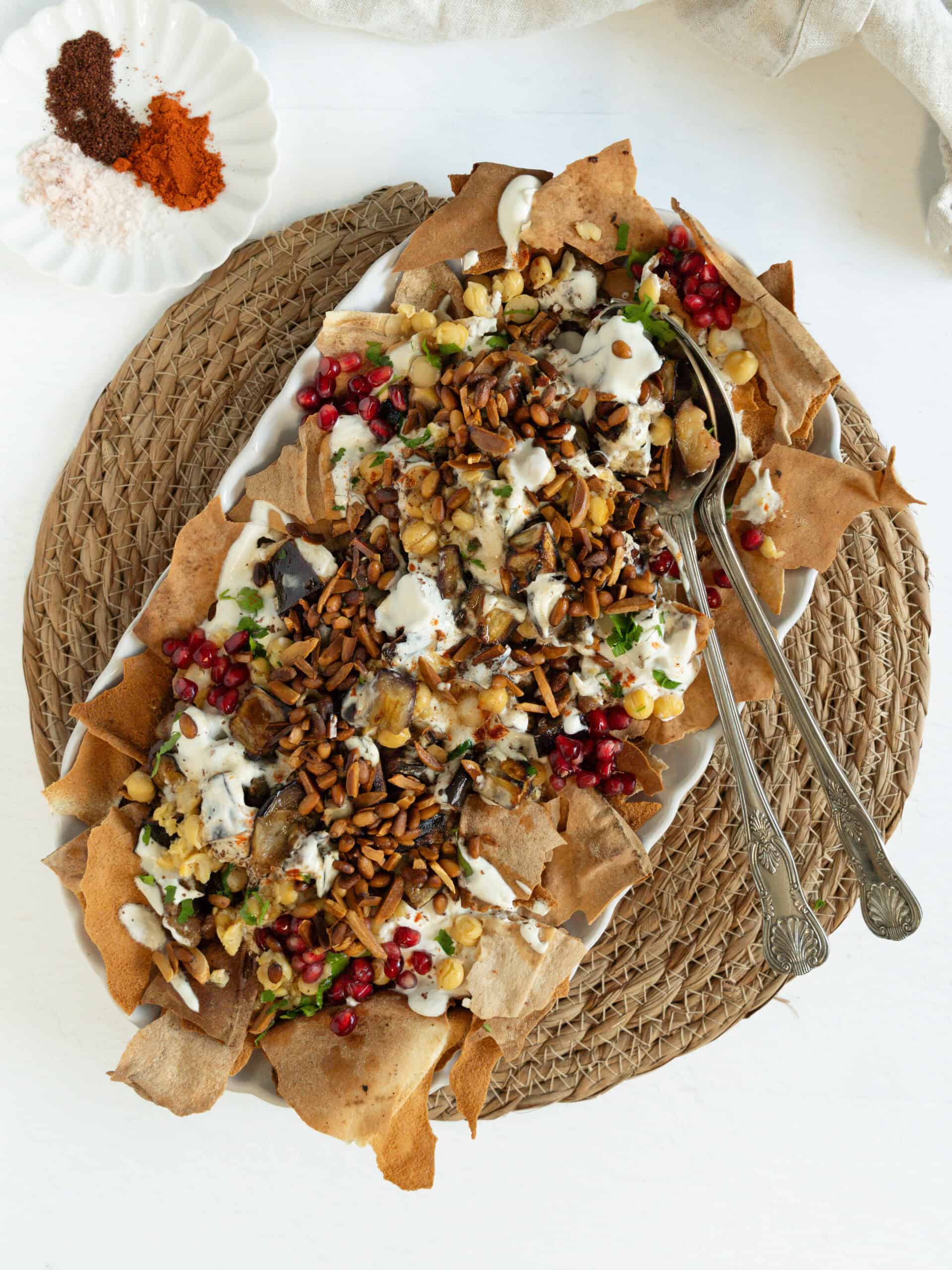
Eggplant fatteh is a layered Lebanese dish of crispy pita bread, warm chickpeas and roasted eggplant all soaked in a tangy yogurt tahini sauce and finished with sizzling buttery toasted nuts. It's a hearty vegetarian dish eaten for breakfast and brunch across the Levant.
My Lebanese family calls any fatteh dish tisiyeh. It's interchangeable.
I recently learned that other parts of the Levant; Syria and Jordan among them, use the same name. When I asked my mother why - the answer was that it's believed to be Syrian influence somewhere in our lineage, which tracks with how food names travel with family history more than borders do.
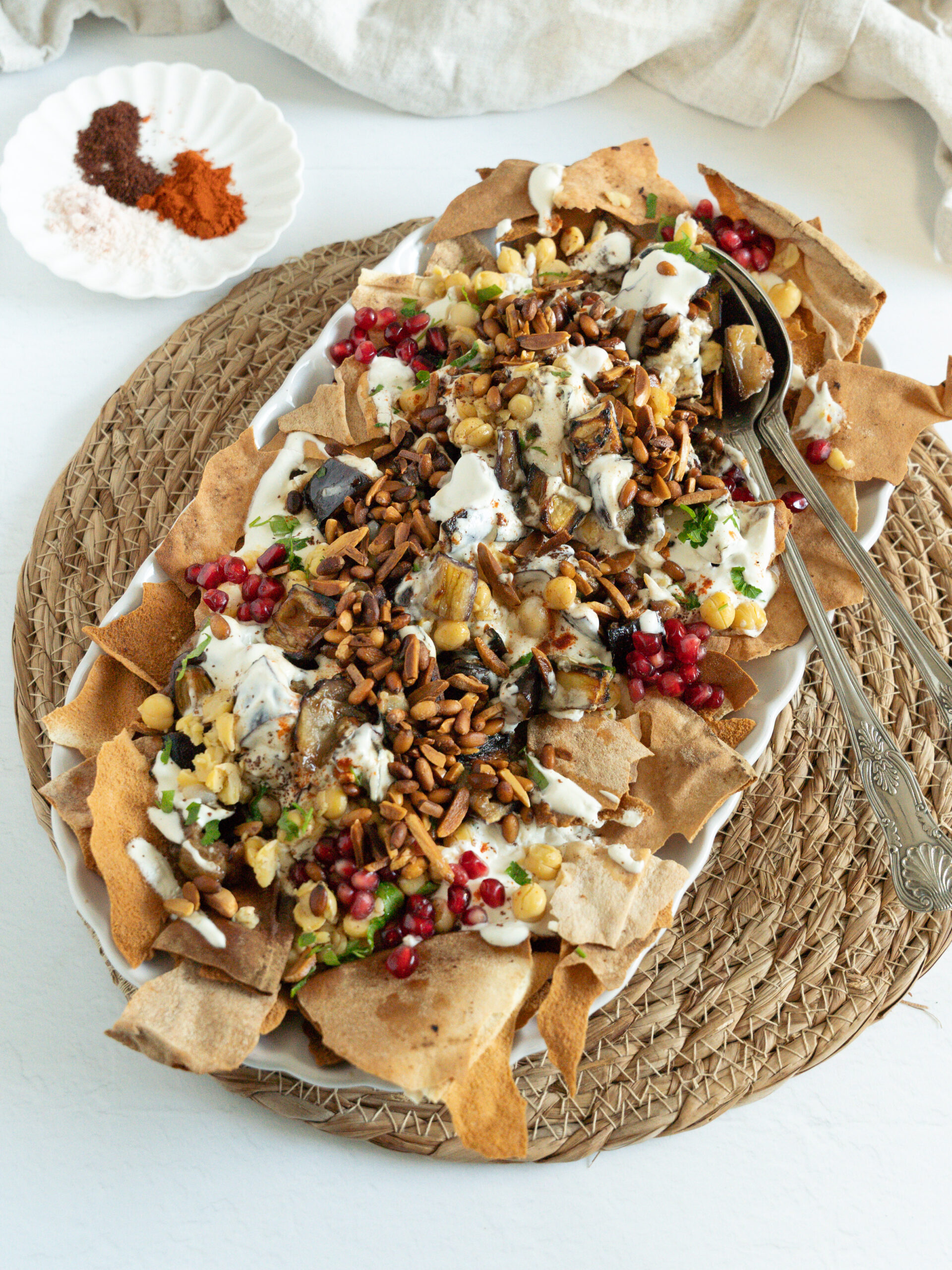
What Is Eggplant Fatteh?
Eggplant fatteh or fattet batinjan, is a layered dish built on torn, fried/baked pita bread, warm chickpeas and a tangy yogurt tahini sauce - topped with fried/roasted eggplant and finished with buttery toasted nuts. It's one variation in a wider fatteh family that also appears with meat, chicken or fish.
Curious what else I make with eggplant? The full guide is here.
Fatteh Across the Levant
The Arabic word fatteh simply means crushed pieces referring to the torn bread and other bits throughout the dish.
Fatteh is beloved across Lebanon and most of the Levant and comes with a range of toppings such as ground meat, pulled chicken, offal, white fish, makdous or plain chickpeas. All built on the same base of repurposed stale pita, boiled chickpeas and yogurt sauce.
This version, fattet batinjan (batinjan meaning eggplant) swaps in roasted eggplant as the topper. It's usually eaten as a hearty breakfast or brunch though there's no real rule against having it anytime.
Ingredients
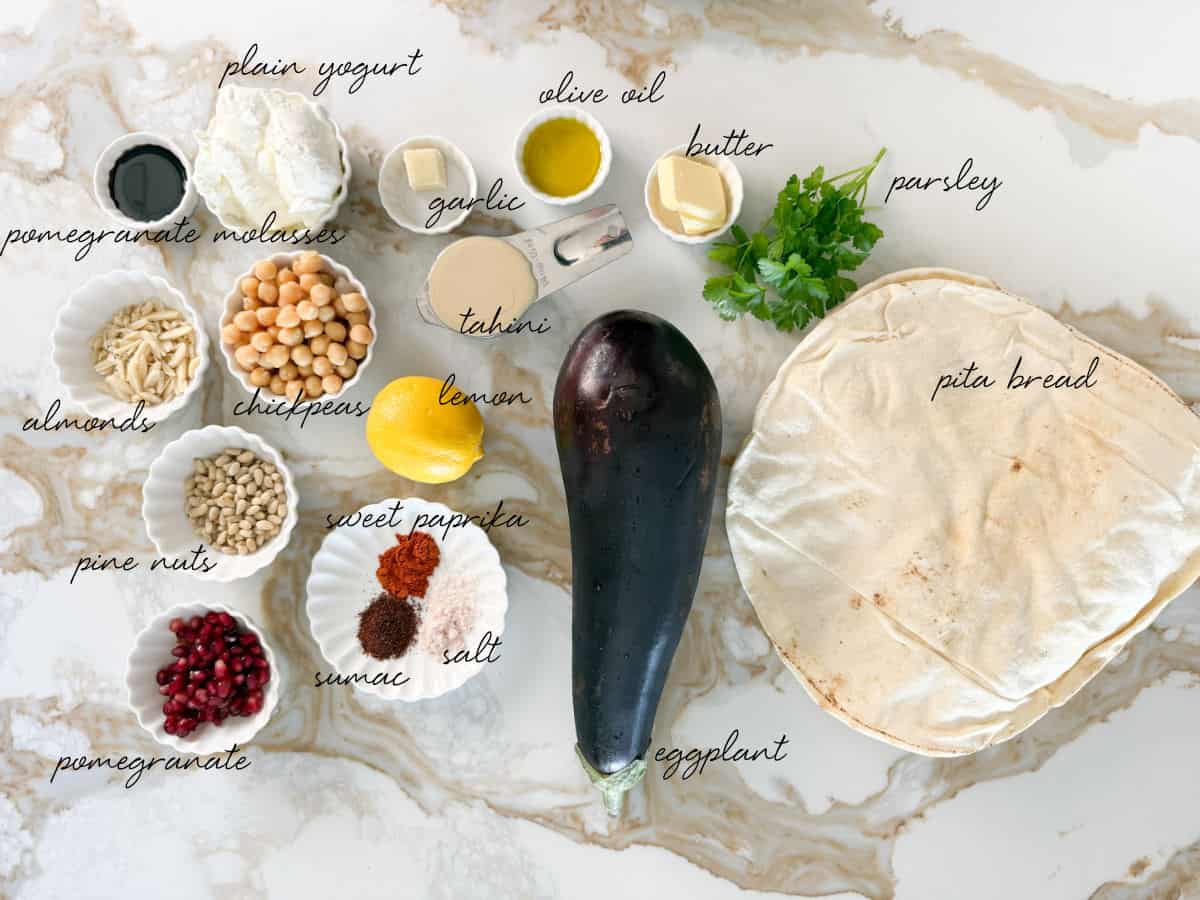
The complete list of ingredients with measurements, can be found in the full recipe card below.
Eggplant can be any variety. I usually reach for globe or the long type which I cut into 2cm (¾-inch) cubes. Once cooked (I oven roast mine most of the time, though I'll fry it occasionally) I'll toss the pieces in a small amount of pomegranate molasses. This is close to how I make Lebanese fried eggplant worth a look if you end up with leftover eggplant.
Chickpeas are non-negotiable for me! A fatteh without them isn't really fatteh, IMO. Freshly boiled chickpeas give the best flavor when you have the time but canned work fine in a pinch; rinsed and then simmered to soften further. Save the warm chickpea water as it goes into both the sauce and the assembly for flavor. Fatteh isn't meant to be a dry dish.
The yogurt tahini sauce is known as salsat laban and is usually made with pot-set plain yogurt (full-fat dairy). However, if you're plant-based a dairy-free kefir yogurt is my pick as it has that same tang without one flavor taking over. Blend it with tahini, lemon juice and white vinegar - the vinegar does a lot of the flavor lifting here.
The bread is the perfect use for stale Lebanese pita though any pita will do. Torn into bite-sized pieces for that rustic look. Traditionally it's the base layer but after enough complaints from my siblings and me about soggy bread when we were kids we now serve it in a way that makes it both crispy and soaked.
The bread will still soften eventually even served immediately. Some people love that and typically vendors in Lebanon serve it that way on purpose but I've landed on a mix of both: bread that's soaked up flavor along with pieces that stay crisp. I use gluten-free pita for myself and regular Lebanese pita when I make it for the rest of the family. You do not need to oil the bread prior to placing in the oven.
To finish pan-fried sizzling nuts in butter and olive oil is the minimum topper and honestly that alone is good enough - so much yum! I usually go further with fresh pomegranate arils (1000% worth it if you can get your hands on this), chopped parsley, a sprinkle of sumac and sweet paprika. All together in this dish it's something else.
Layering Fatteh
The full set of instructions are found in the below printable recipe card.
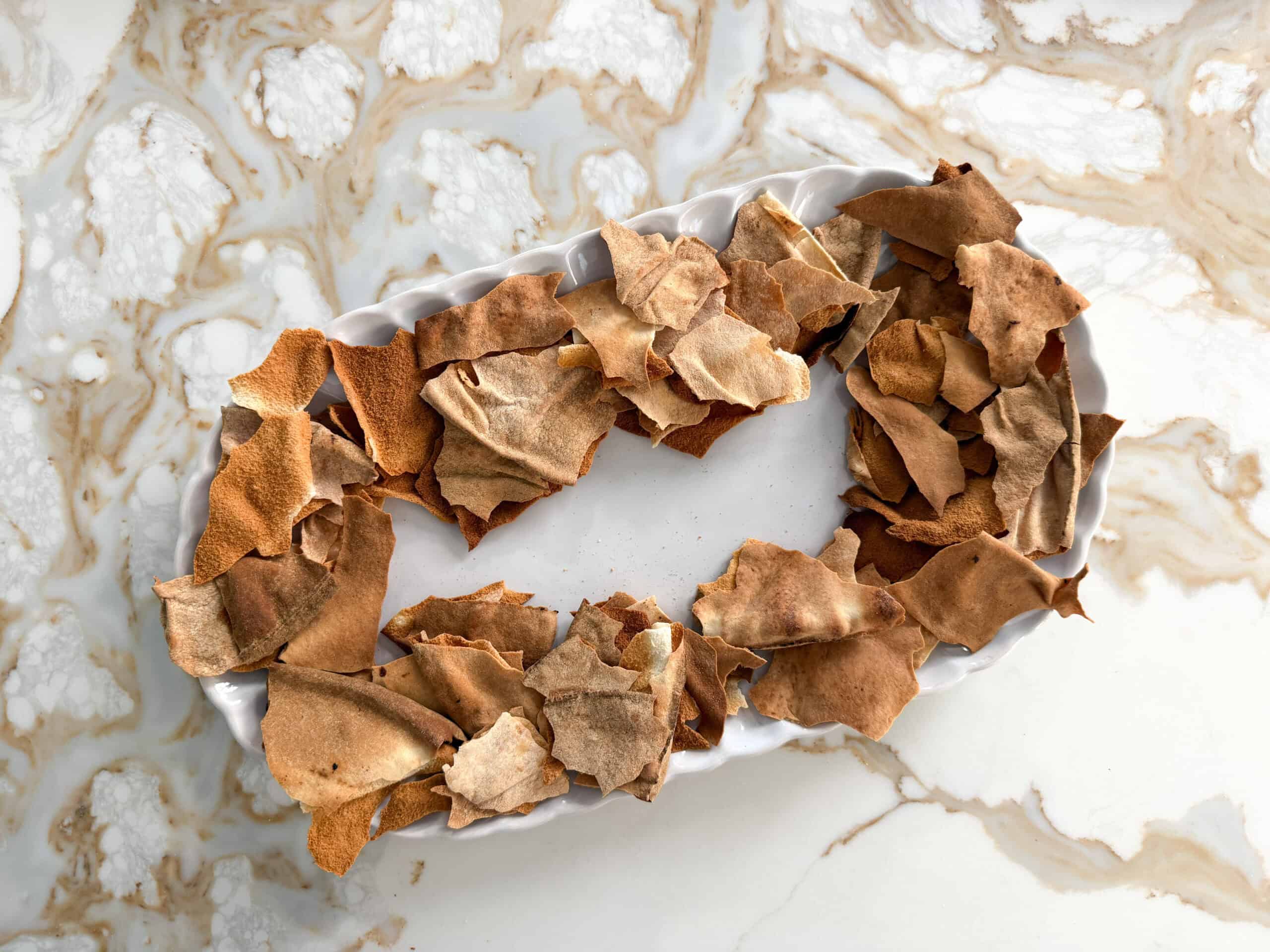
- Layer the crispy broken pita bread. I like to leave a gap in the center but it's not necessary.
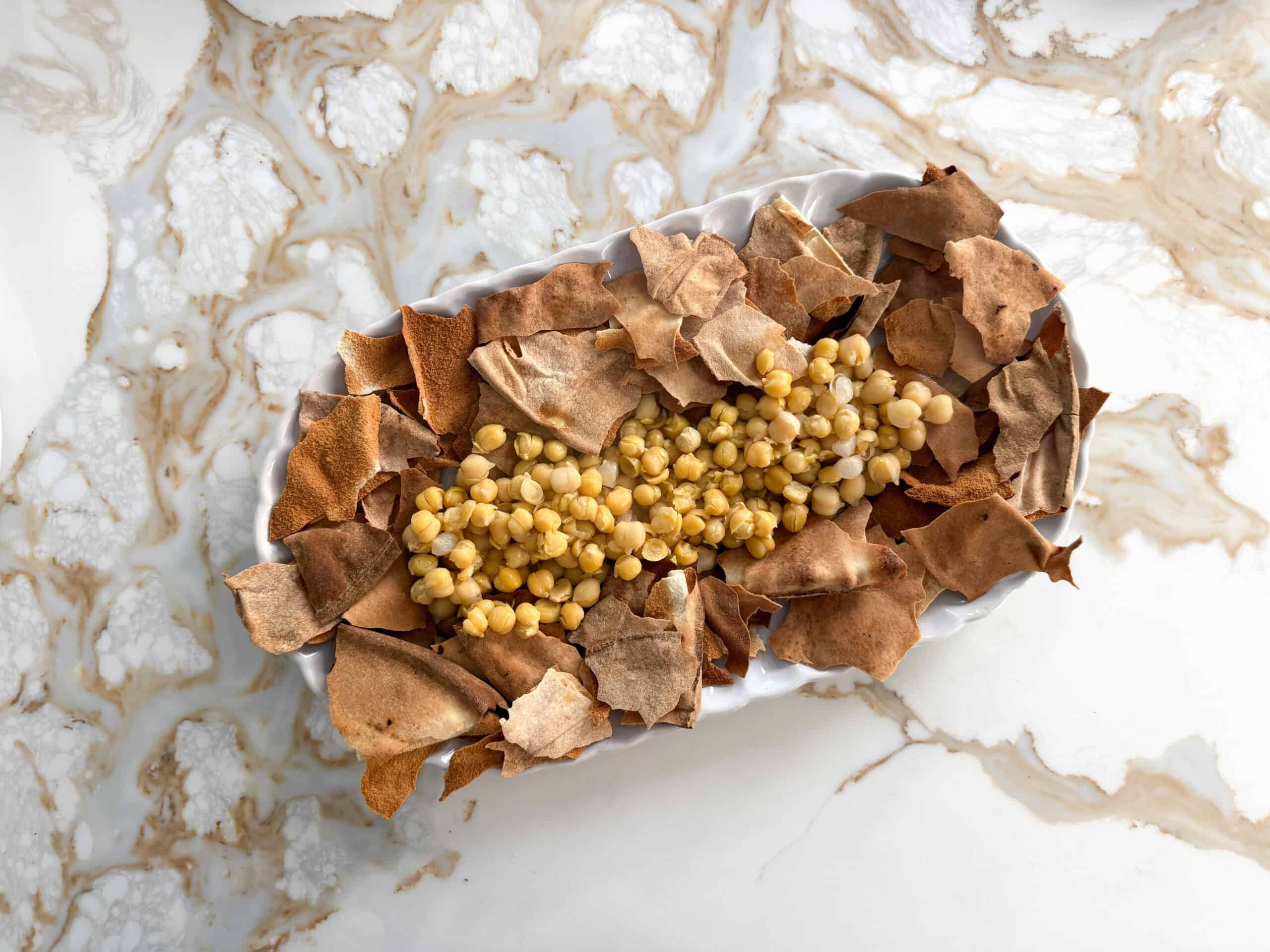
- Add the hot chickpeas with some of their water.
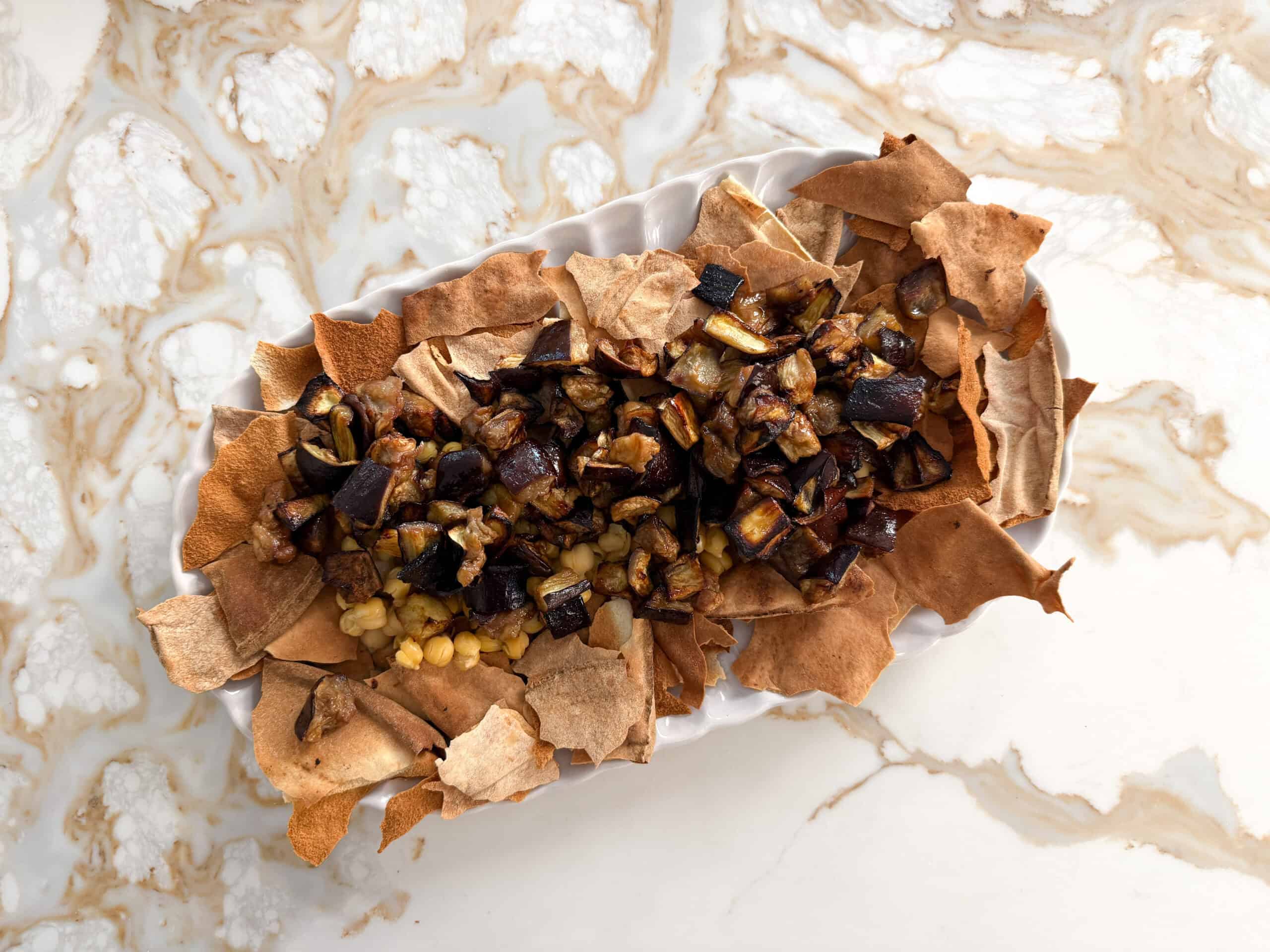
- Add the eggplant pieces.
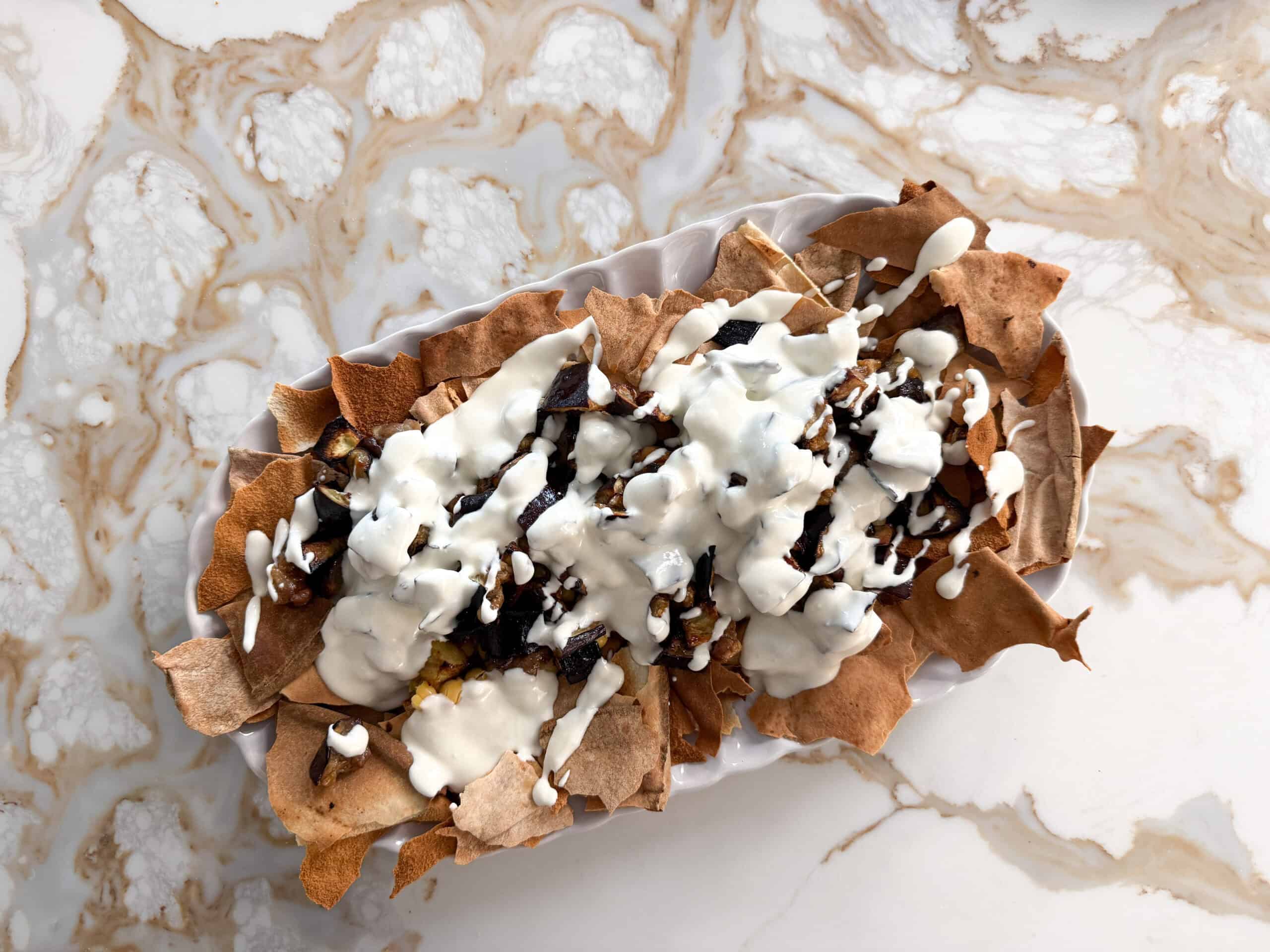
- Pour on the yogurt sauce.
Janelle's Tips
- The pieces of fatteh can be prepped ahead. Bread can be baked or fried the day before and kept crisp stored on its own in the pantry. Chickpeas can be boiled ahead and reheated. The sauce can be made ahead too and loosened with warm chickpea water before serving. If you're prepping in stages cook the eggplant and fry the nuts just before serving.
- Don't assemble fatteh until you're about to serve it. This keeps the bread crunchy for longer. As explained above - a mix of soaked and crisp bread is my preference.
- Beyond oven roasting and frying you can air fry the eggplant too.
How to Eat Fatteh
Fatteh is always served fresh and hot; either on a shared platter or in individual bowls as breakfast or brunch.
Since it's a layered dish with several components already going on, it's often served on its own though it does show up as part of a bigger spread at the breakfast table.
Did you make this? I'd love to know! Leave me a comment below with a ★★★★★ star rating or tag @plantbasedfolk on social media.
Recipe
Eggplant Fatteh (Fattet Batinjan)
Ingredients
Yogurt tahini sauce
- 1 cup plain yogurt (or plain vegan kefir yogurt for the vegan option)
- 2 tablespoons tahini
- 1 clove garlic crushed
- 1 tablespoon lemon juice fresh
- 1 tablespoon white vinegar
- ¼ teaspoon salt
- ¼ cup Water to thin
For the bread
- 1½ Lebanese pita bread or any pita bread
Eggplant
- 1 medium eggplant about 500g / 1.1lb, cut into 2cm / ¾-inch cubes
- 2 tablespoons olive oil or up to ¼ cup if frying instead of roasting
- ½ teaspoon salt
- 1 tablespoon pomegranate molasses
For the chickpeas
- 1 can Chickpeas 400g / 15oz, drained and rinsed
- 1 Pinch Salt
To finish
- ⅛ cup pine nuts
- ⅛ cup slivered almonds
- 1 tablespoon butter (dairy-free for vegan option)
- 1 tablespoon olive oil for toasting nuts
- Fresh parsley chopped, for garnish
- Sweet paprika for garnish
- Sumac for garnish
- Pomegranate arils for garnish
Instructions
- Whisk together yogurt, tahini, crushed garlic, lemon juice, vinegar and salt. Add water gradually until smooth and pourable. Set aside.
- Oven: place the pita breads on a lined baking sheet and bake at 220°C (425°F) until golden and crisp. Flipping halfway - about 7 minutes total. Frying: heat oil (¼ cup) in a large pan over medium heat, add the torn bread and fry until golden and crisp on all sides. Remove immediately to a paper-lined plate.
- Oven: toss the eggplant with oil and salt. Spread on the same lined pan used for the bread and roast for 25 minutes turning halfway. Frying: reheat the remaining oil over medium-high heat, add the eggplant and fry until deeply golden and tender. Toss immediately with the pomegranate molasses while still warm.
- Over high heat, bring the chickpeas, pinch of salt and 2 cups of water to a gentle boil in a small pan then reduce to medium-low and simmer 10 minutes. Remove any loose skins.
- Break the crisp bread into bite sized pieces and layer them on a deep serving platter. Top with the warm chickpeas and 3-4 tablespoons of the warm chickpea water then the pomegranate-glazed eggplant. Whisk 2 tablespoons of warm chickpea water into the yogurt tahini sauce and pour generously over the top (I serve about a third of the sauce on the side - see notes). Garnish with parsley, sumac, paprika and pomegranate arils.
- Heat butter and olive oil in a small pan over medium-low heat. Toast the pine nuts and almonds until golden (watching closely as they burn fast) Stir continuously.
- Pour the nuts over the fatteh along with the sizzling butter and oil. Serve immediately while the bread is still crisp.
Video
Notes
Nutrition
N.B., nutrition info is an estimate based on an online nutrition calculator. This will vary based on the specific ingredients you use.
 If you enjoyed this recipe, consider supporting my work for the cost of a cup of coffee.

Comments
No Comments