
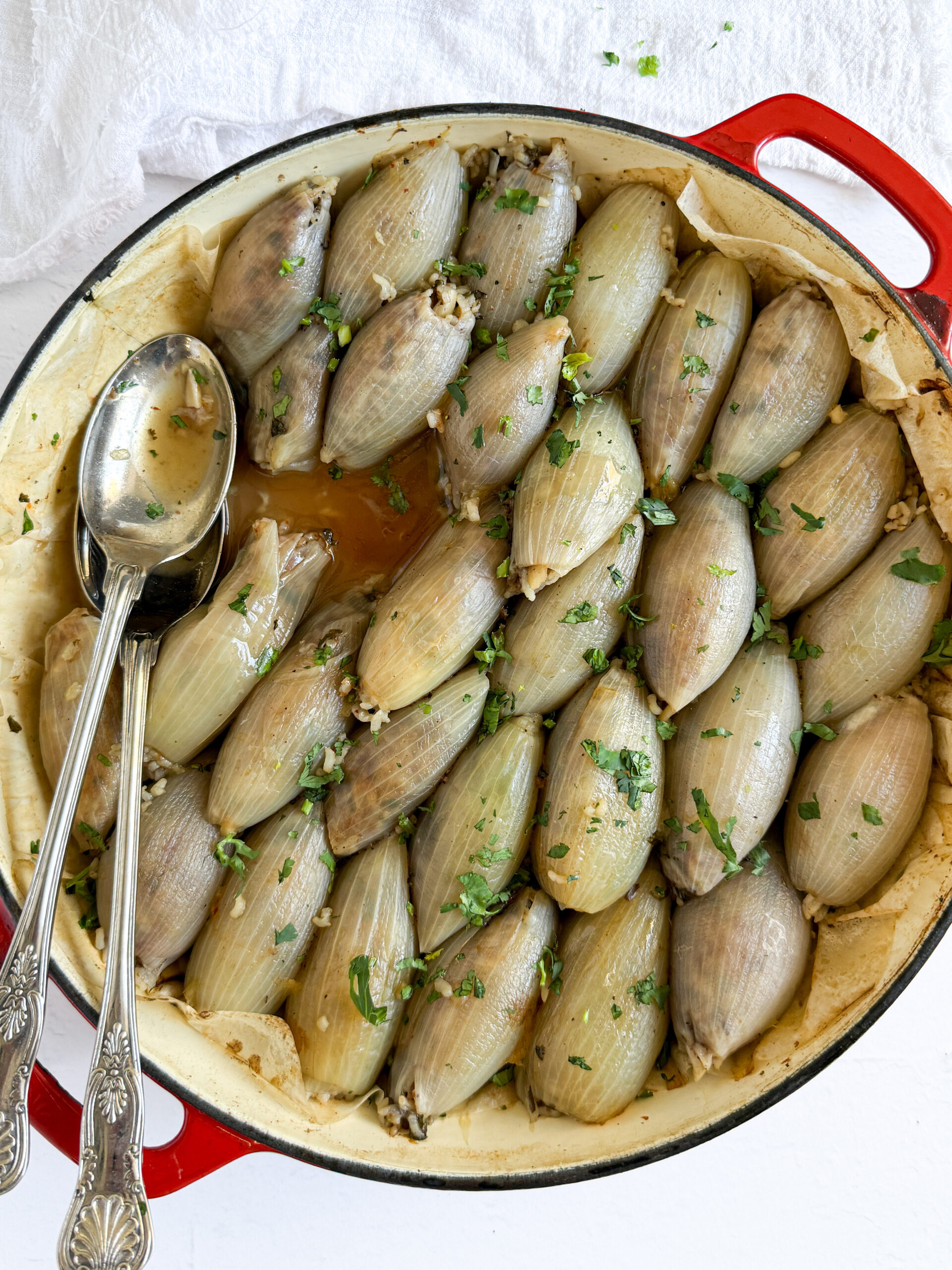
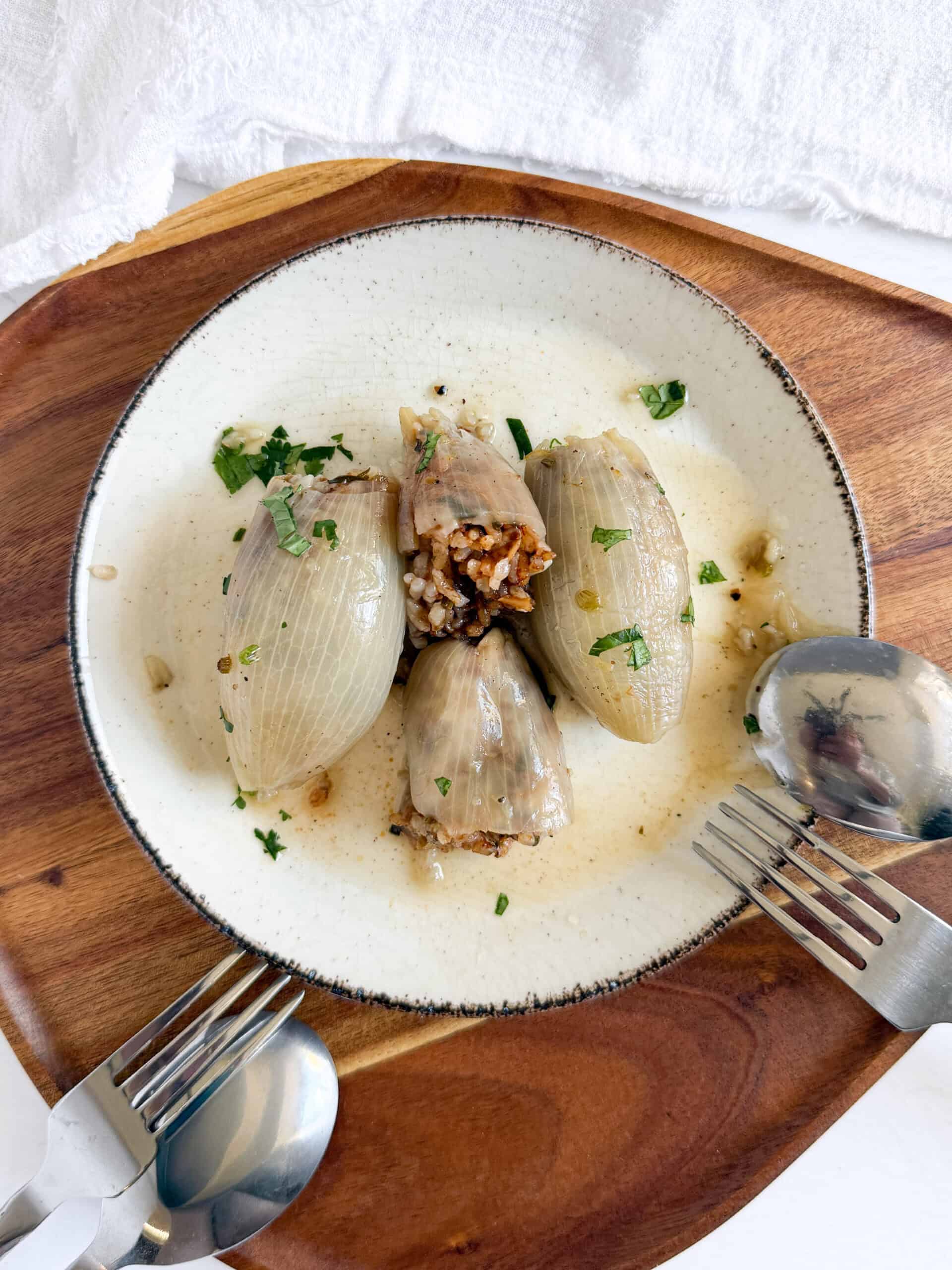
Stuffed onions are made with rolled tender layers of onion filled with rice, nuts and herbs, baked in a tangy lemon broth.
Before You Start
- The one mistake to avoid: don't toss the onion cooking water. It's what tops up your broth to the right volume and deepens the flavor.
- No aci biber on hand? Swap it for an extra tablespoon of tomato paste plus a small pinch of chili flakes if you'd like some heat.
- Why the incision matters: cut only halfway into the onion - from the outside toward the center but never straight through as a full slice. The onion layers will easily peel apart whole.
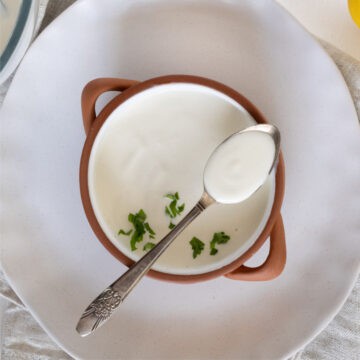
- Serve as a side or with a side of fresh salad and an optional dollop of plain yogurt.
A Quick Note from Janelle
In Arabic we call this dish basal mahshi, basal means onion and mahshi simply means stuffed, which is a category that runs through many vegetables in Lebanese cooking: zucchini (mahshi kousa - most popular), eggplant, cabbage, grape leaves and onions among them.
Onions are the one most people skip. I don't know why, but I can definitely say this dish is very easy to prepare. It just takes a little bit of patience to prep whole layers of the onions then they practically roll themselves!
The finished dish is quite enjoyable. The baked onions have a soft almost jammy texture - completely different from raw onion.
I've tested this specific recipe on and off for the past several months, adjusting the broth ratio and the filling balance until it held up consistently batch after batch, especially scrutinizing the flavor.
Flavor profile: basal mahshi is a trifecta of flavors, tangy, savory and sweet. The lemon broth cuts through the herb-filled rice, nuts and sweet onion. Each bite is a burst of flavor.
Stuffing vegetables is not new to me and is something I've built real hands-on expertise in since first being introduced to this type of cooking by my parents and heritage. Two of my other favorites from that same stuffed-vegetable practice are stuffed eggplants and cabbage rolls, alongside my stuffed bell peppers (which is the flavor inspo for this recipe). For more of these types of meals, take a look at the full Lebanese stuffed veggies collection.
Ingredients
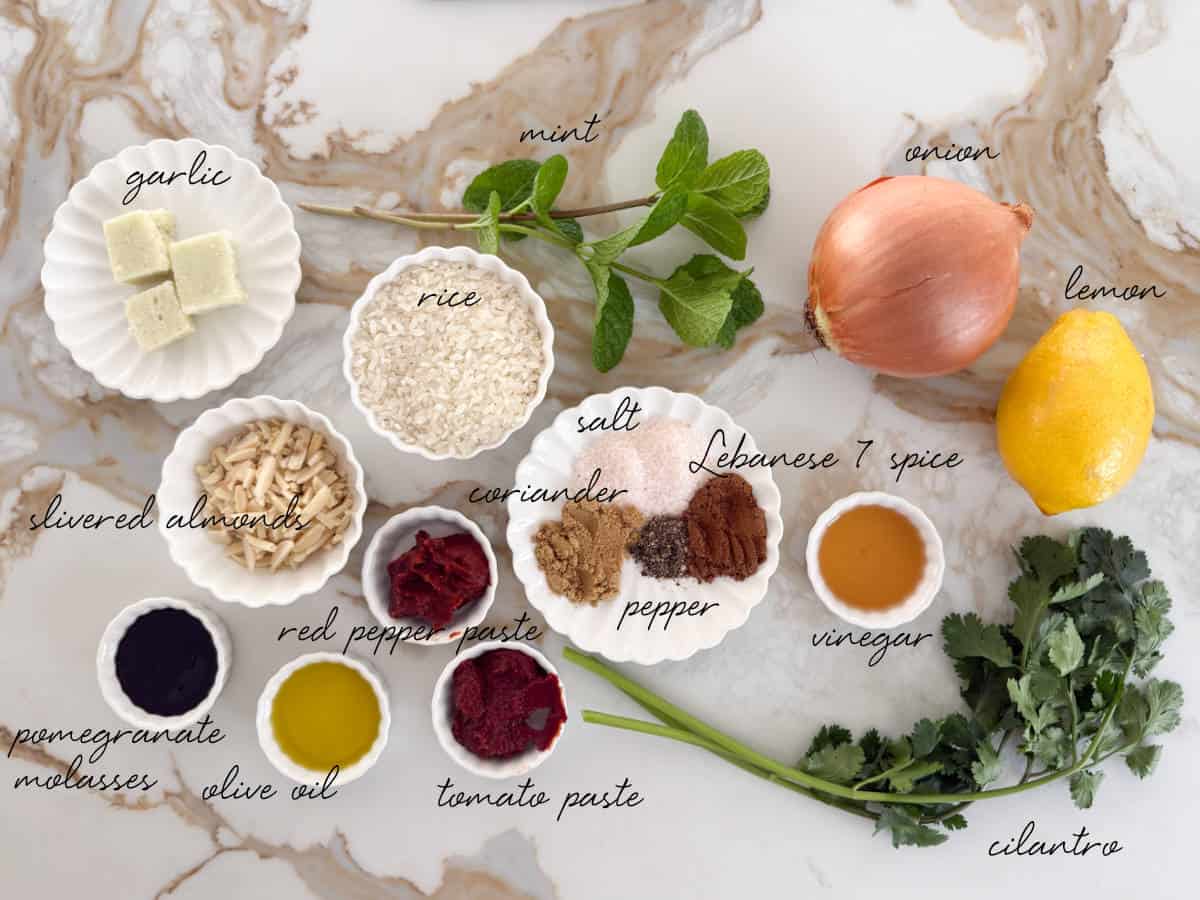
I'll take you through the ingredients that require some explanation, the rest I believe to be straightforward. The full list is found in the recipe card below.
When selecting the onions, I always aim for ones that are around 250 grams/8.8 oz. This ensures each stuffed onion piece is hefty and there's less "stuffing around" (aka messing about) pun intended, haha.
As this recipe is sans ground meat, to hold the rice filling together and make it easier to handle I've used a combination of tomato paste and hot red pepper paste known as aci biber salcasi, which in the amount used here isn't hot at all - you can really use any hot pepper paste here. I just reach for this one since it's a staple in my half-Armenian household and they love the stuff!
Lebanese 7 spice is a blend of 7 spices which can be homemade or store-bought (linked below). It's commonly used throughout Lebanese cooking, so you'll come across it in many of my savory recipes. If it's hard for you to obtain you can replace it with straight allspice.
Pomegranate molasses is sweet and sour and widely used throughout my recipes, it adds a lot of flavor for very little effort. I recommend not skipping this ingredient, it's carried in most major supermarkets these days, otherwise this is the pomegranate molasses I recommend.
What I Use to Make This Recipe
 Buy Now →
  Buy Now →
  Buy Now →
 Boil, Fill, Roll and Bake
I'll take you through the visual process of making stuffed baked onions, the full set of written instructions can be found in the recipe card below. Do note that I have used parchment paper under my onions in the casserole dish as I cracked the dish, so this is not mandatory.
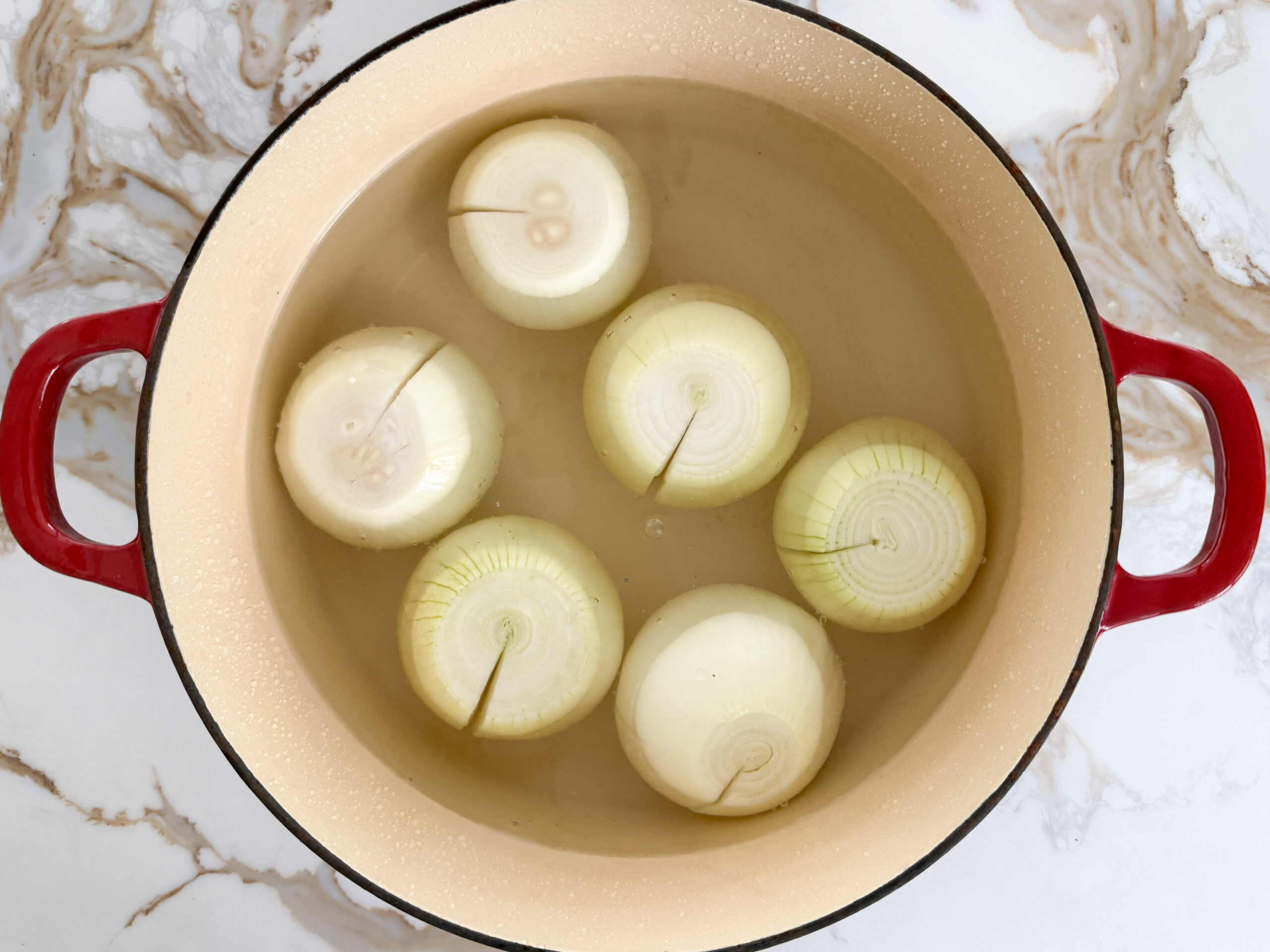
- Boil the onions with an incision for 15 minutes.
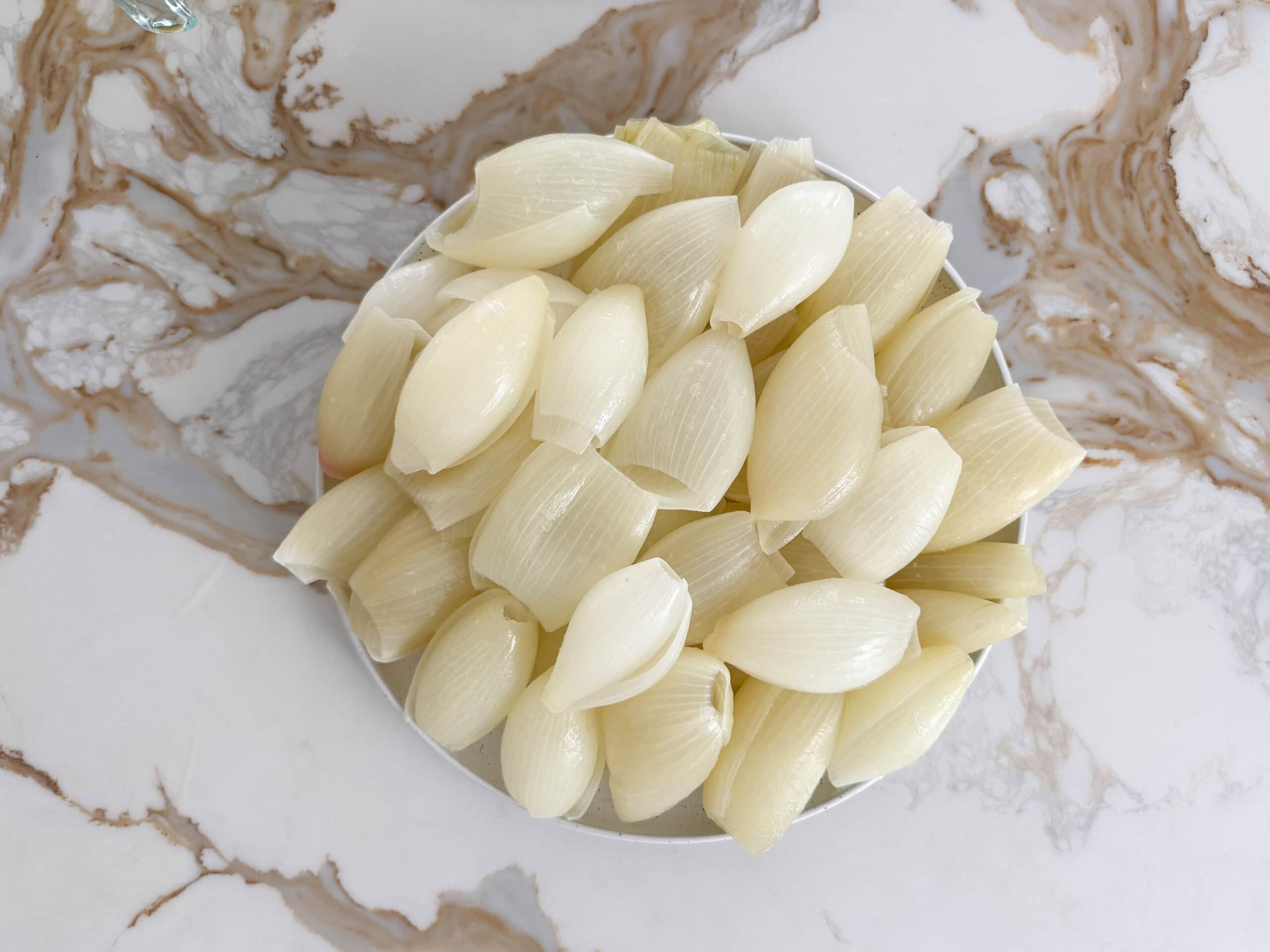
- Separate the onion layers under cold running water.
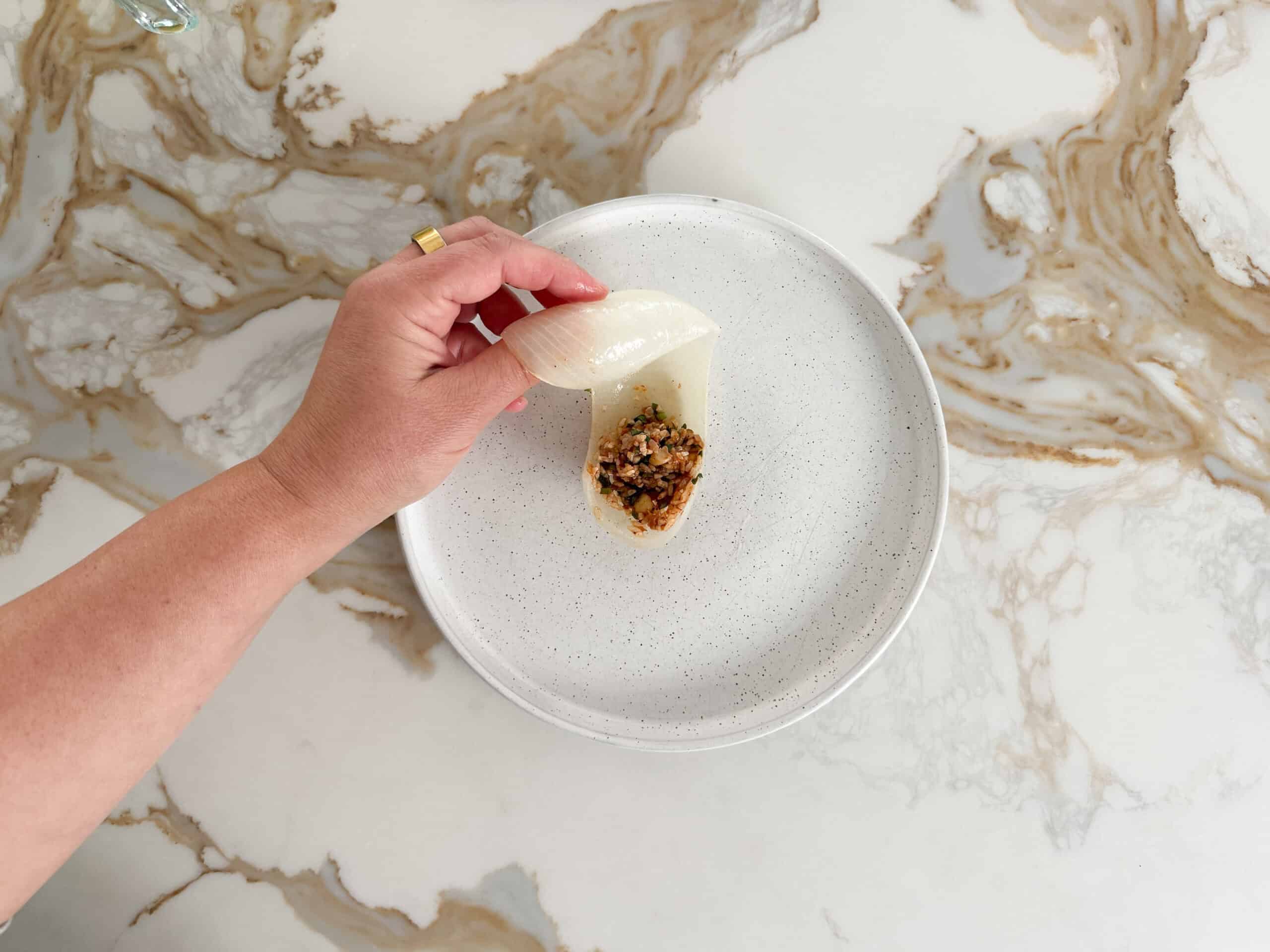
- Fill each onion layer with the appropriate amount of rice filling.
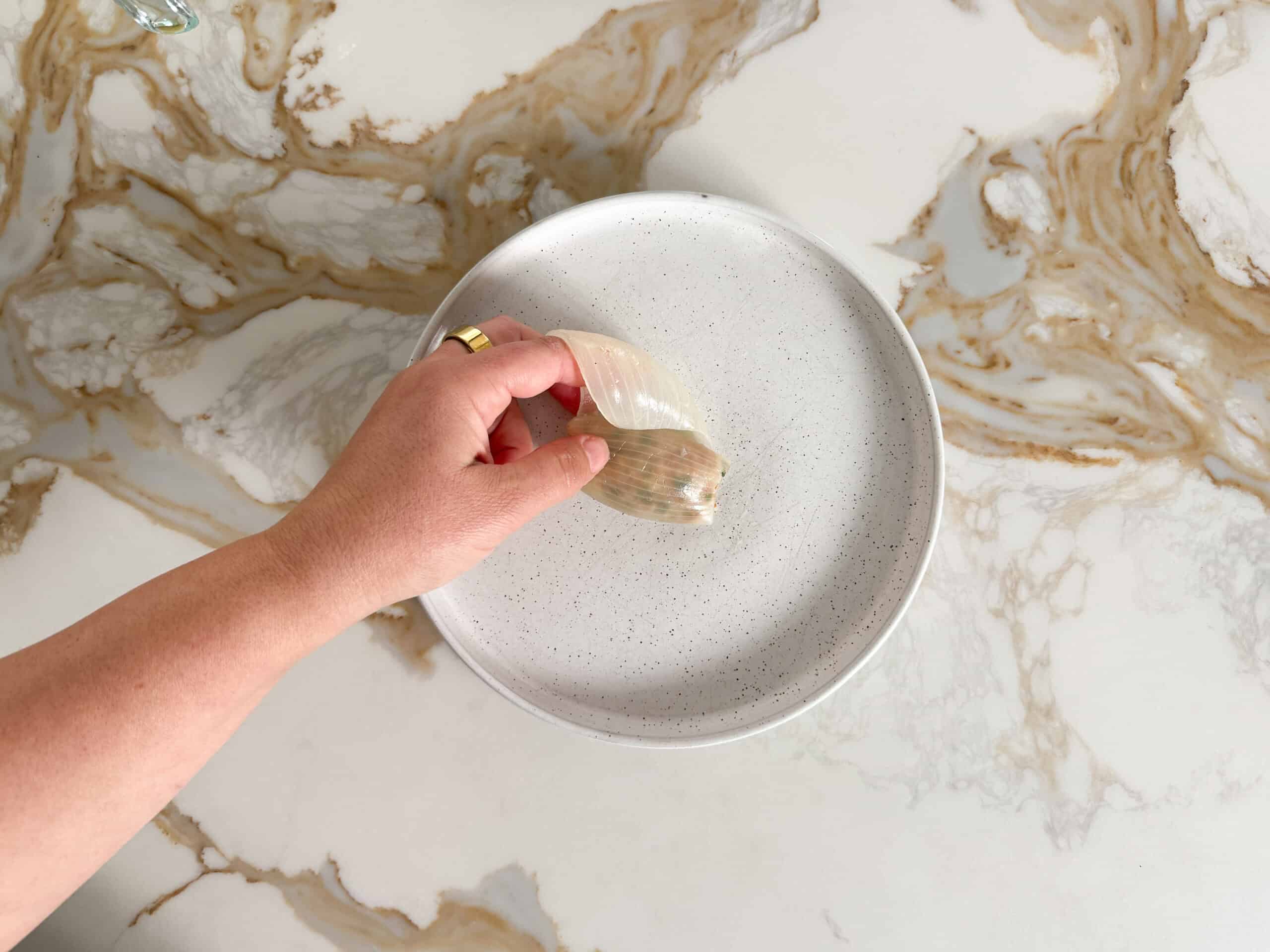
- Roll the layer of onion around the filling.
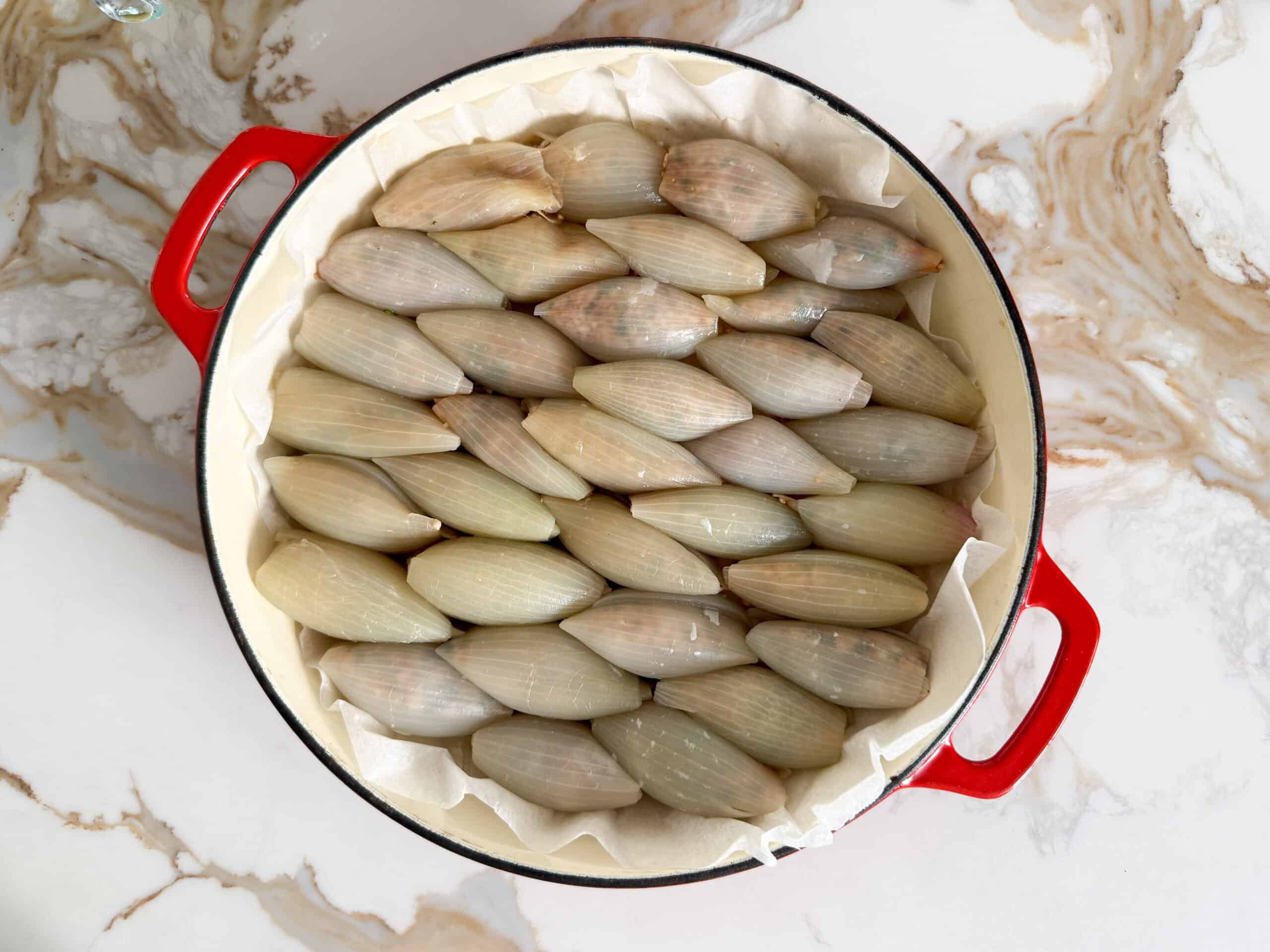
- Place the uncooked stuffed onions seam-down into a casserole dish.
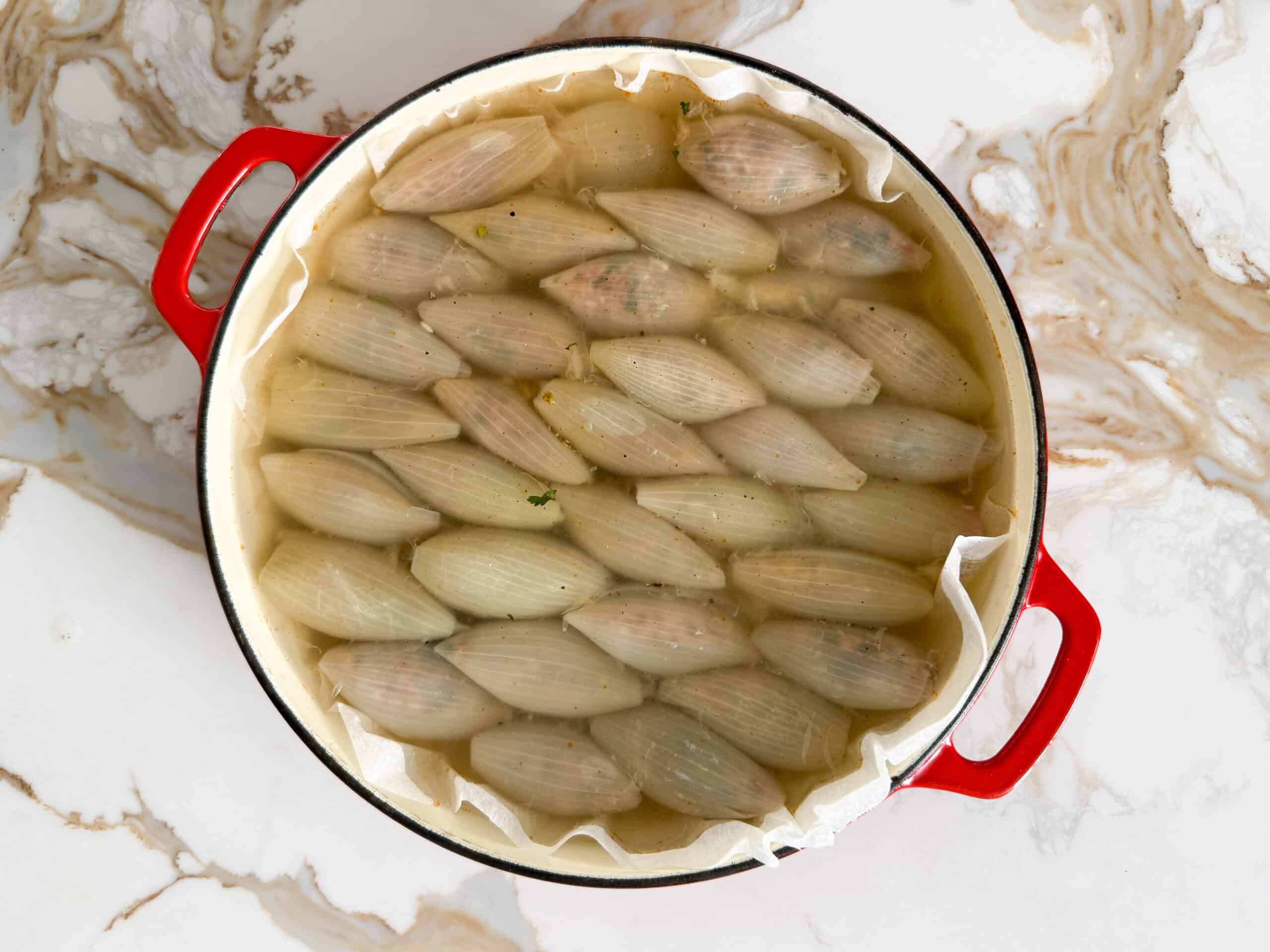
- Cover with the cooking liquid and bake.
Janelle's Tips
- To speed up the making of this meal, prepare the filling while the onions are cooking.
- The amount of onions used and the size of my 30cm/12-inch cast iron casserole dish with lid fit perfectly together. The pattern you layer the onions in doesn't affect the cooking, but I like to arrange mine like in a shingle pattern.
- I find it easier to push out the onion hearts first when separating the onion layers.
- The liquid will reduce significantly and thicken once cooked - spoon it over the baked stuffed onions as you serve.
- Storage: keeps in an airtight container in the fridge for up to one week. I'm currently testing out storing them in the freezer, TBA.
Did you make this? I'd love to know! Leave me a comment below with a ★★★★★ star rating or tag @plantbasedfolk on social media.
Recipe
Stuffed Onions (Basal Mahshi)
Ingredients
- 6 large onions ~250g (8.8 oz) ea
Filling
- 1 ¼ cup medium grain rice washed and drained
- 1 tablespoon tomato paste
- 1 tablespoon hot red pepper paste aka aci biber salcasi
- 3 cloves garlic crushed
- ½ cup cilantro finely chopped (fresh coriander), plus more for garnishing
- ¼ cup mint leaves finely chopped
- ¼ cup pine nuts or slivered almonds
- 1 teaspoon Lebanese 7 spice or allspice
- 2 tablespoon olive oil
- 1 tablespoon pomegranate molasses
- 2 teaspoon salt
- ¼ teaspoon black pepper cracked
- 1 tablespoon vinegar I use apple cider vinegar
- 1 teaspoon coriander powder
Cooking Liquid
- ⅓ cup lemon juice fresh
- 1 tablespoon vinegar I use apple cider vinegar
- 1 teaspoon salt
- ¼ teaspoon black pepper cracked
- reserved onion cooking water to top up to 3½ cups total
Instructions
- Cut off the ends of each onion and peel them. Then place a slit in each onion from the center outwards to open the layers, being careful not to slice the onions completely. Watch video for demonstration.
- Place the onions into a pot and cover with cold water. Bring them to a boil on high heat. Once boiling turn the heat down to medium and simmer for 15 minutes.
- Transfer the boiled onions to a colander and allow them to start cooling. Keep the onion water to use in the broth. Under running water, carefully separate each onion layer discarding any loose membranes. Save the hearts of the onions to use in other recipes.
- In a bowl add the rice, tomato paste, red pepper paste, garlic cloves, cilantro, mint, pine nuts, Lebanese 7 spice, olive oil, pomegranate molasses, black pepper, salt, vinegar and coriander powder. Mix until evenly combined.
- Take each onion layer and add a spoonful of the rice mixture, then roll to enclose. Place the stuffed onion into a casserole dish (see tips above) seam-down. Repeat until all layers and rice are used.
- Whisk together the lemon juice, vinegar, salt, and black pepper. Then top up with onion water until 3½ cups is reached.
- Pour the cooking liquid over the onions. Place the lid onto the casserole dish and bake in a preheated fan-forced oven of 180C (356F) for 75 minutes.
- Remove the onions from the oven and let them stand for 15 minutes with the lid on. Serve warm or at room temperature with a sprinkle of fresh cilantro.
Video
Notes
Pine nuts can be swapped for slivered almonds.
Store in an airtight container in the fridge for up to one week. US cups and spoons measurements have been used. 1 cup is 240ml, 1 tablespoon 15ml, 1 teaspoon 5ml
Nutrition
N.B., nutrition info is an estimate based on an online nutrition calculator. This will vary based on the specific ingredients you use.
 If you enjoyed this recipe, consider supporting my work for the cost of a cup of coffee.
Comments
No Comments