
This base maamoul dough recipe creates traditional Middle Eastern semolina cookies perfect for any type of filling.
This dough is the foundation of all maamoul cookie varieties from my Lebanese kitchen. Once you understand how it works, you can confidently make any filling variation without changing the base.
I learned this dough by watching my mother and aunties make it year after year, especially around family and religious celebrations. It is simple in ingredients but precise in technique. The texture comes from patience, not complexity.
How This Dough Is Used
This maamoul dough is used in:


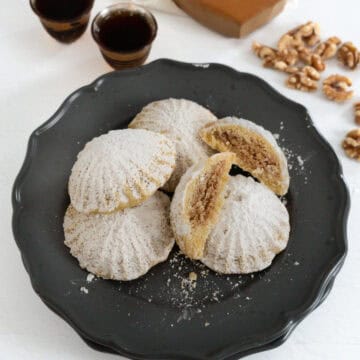
Each filling brings its own flavor, but the dough remains constant.
What Makes Maamoul Dough Different
Maamoul dough is not like regular cookie dough.
It is made with semolina instead of flour, which gives the cookies their signature crumbly, sandy texture. The dough is combined, rested, and never overworked.
The goal is a dough that:
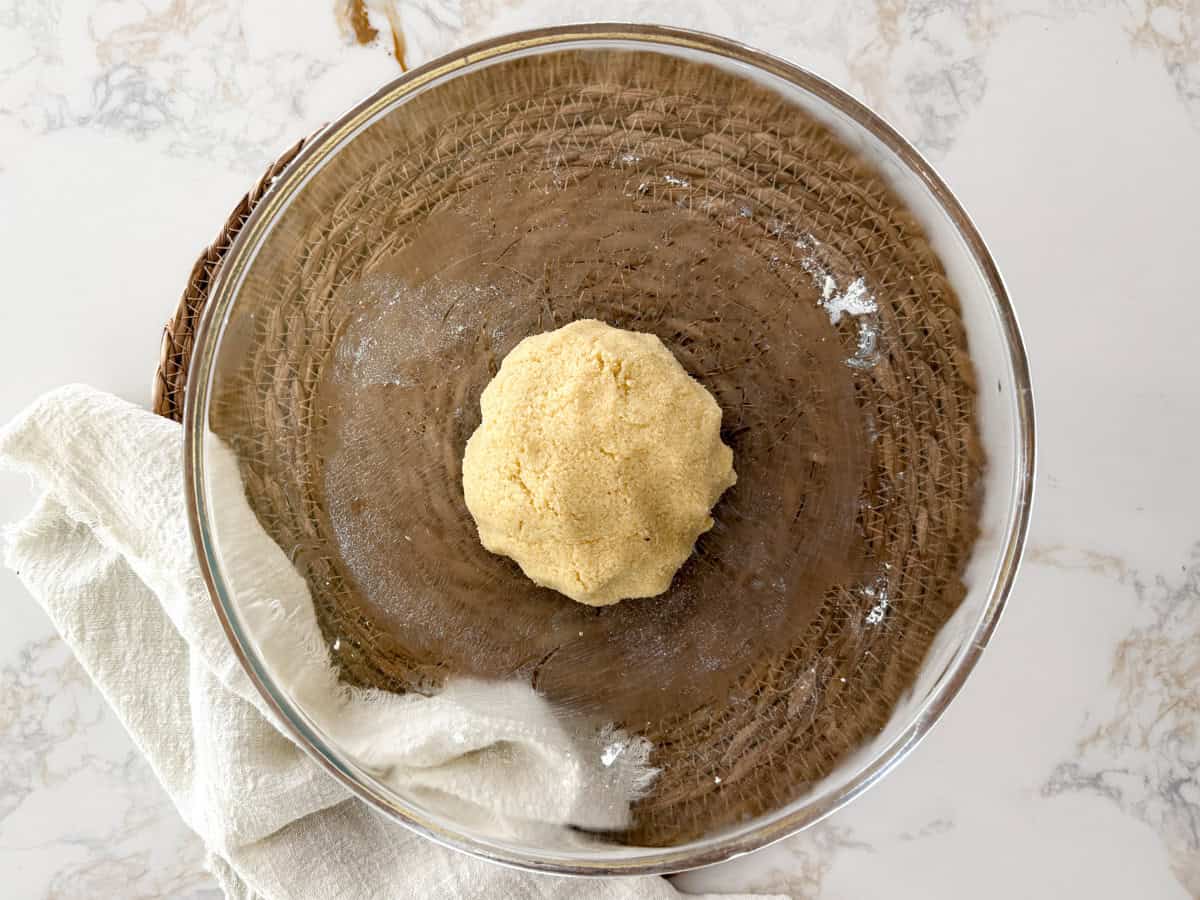
- Holds together when pressed, resembling wet sand
- Does not stretch
- Crumbles softly when bitten once baked

Semolina Matters
Traditional Lebanese maamoul dough uses both coarse semolina and fine semolina. (I mention Lebanese as that is my heritage)
- Coarse semolina adds structure
- Fine semolina softens the crumb
- Both of them combined create the unmistakable texture
Using only one or the other changes the texture noticeably. This balance is what creates that familiar melt in the mouth feel without turning the cookie dense or dry.

Fat: Ghee vs Dairy Free Butter
Classic maamoul is made with ghee, which gives a rich aroma and flavor.
I use a lightly salted dairy free butter, which works beautifully when handled gently. The key is:
- Soft, not melted fat (as pictured)
- Even distribution with hand mixing until the dough comes together
This keeps the dough tender and prevents unevenness. It's important to note that the type of fat used and the brand of dairy free butter used will alter the way the dough feels and the baking time. I always adjust the baking time when I switch out brands.
Floral Waters
Orange blossom water and rose water are essential to traditional maamoul.
They should be:
- Used lightly
- Balanced rather than dominant
The aroma should be noticeable but soft, never over-perfumed. Too much will overpower the filling. I've linked the brand that I use most and recommend in the recipe card below.
Mahlab
Also known as mahlep, mahlab is worth seeking out. When used alongside the floral waters, it gives maamoul its distinctive, fragrant aroma that I highly recommend.
It's made from ground St. Lucie cherry pits and has a subtle flavor reminiscent of amaretto, IMO.
You'll often find it behind the counter or near the checkout at Middle Eastern or Mediterranean grocers, usually sold in small pouches. It's also readily available online, this ingredient is linked in the below recipe card for your convenience.

Yeast vs Baking Powder
Maamoul can be made with either yeast or baking powder.
Both are used to create a lighter, more delicate crumb rather than a dense texture. The goal isn't for the cookies to rise significantly, but to achieve a tender bite.
My mother prefers using dry yeast, while I prefer baking powder.
Resting the Dough (Non Negotiable)
Resting the dough is what transforms it.
After mixing:
- The semolina absorbs the fat and liquid
- The texture becomes cohesive
- The dough is forgiving to work with, cracking when shaping can easily be mended
Overnight resting is ideal and what I recommend, but even a minimum of six hours makes a difference.
I can always tell when maamoul dough hasn't rested enough, something my mother taught me without ever measuring a thing. The shortbread crumb is too granular, there's too much crunch! It's not to say it's unpleasant, it just is too much.

Shaping and Mold Choice
This dough is used across all maamoul cookie varieties. What changes is:
- The filling
- The mold depth
- Shallow molds are traditionally used for date maamoul
- Deeper molds are used for nut fillings like walnut and pistachio maamoul
The dough itself stays the same.

My shallow mold measurements are: 6.5 cm in diameter (about 2.5 inches) and roughly 1.8 cm deep (about 0.7 inches).
My small and deep mold measurements are: approximately 5.5 cm by 6 cm (about 2.2 x 2.4 inches) and is 2.5 cm deep (about 1 inch).
My deep mold measurements are: 7 cm (2¾ in) in diameter and approximately 2.5 cm (1 in) deep.
Here are some maamoul molds as a pack. Traditionally, maamoul molds aren't standardized, they're hand-whittled from wood, adding to their uniqueness. Many are passed down through generations, which is why you'll often see slight variations in shape and depth. So try to find ones that are close in size as per above.
Common Dough Issues
- Cracking while shaping: the dough may be too dry, too wet, or too cold straight from the refrigerator, or softened too quickly by warm hands.
- Cracking while baking: this usually happens if the dough is too dry or if the ball wasn't rolled completely smooth before shaping. Deep seams in the dough can split open in the oven as the heat expands the surface. See the image below of an example.
- Micro cracks after baking: usually resolve themselves once the maamoul cookies are completely cooled to room temperature.
Maamoul rewards a light hand.

Did you make this? I'd love to know! Leave me a comment below with a ★★★★★ star rating or tag @plantbasedfolk on social media.
Recipe

Maamoul Dough
Ingredients
Dry Ingredients
- 1 cup Coarse semolina
- ¼ cup Fine semolina
- ⅛ cup White sugar
- ¼ teaspoon Baking powder
- ½ teaspoon Mahlab optional but highly recommended
Wet Ingredients
- ½ cup Butter Softened. I used dairy free. See above notes about this.
- ½ teaspoon Orange blossom water
- ½ teaspoon Rose water
- 1 tablespoon Milk I used almond milk
Instructions
- In a large mixing bowl, stir together all the dry ingredients until evenly distributed.Add the wet ingredients. Gently bring the mixture together with your hands until a soft dough forms. It should feel slightly sandy but hold its shape when squeezed.Shape the dough into a ball, cover tightly, and refrigerate overnight to allow the semolina to fully hydrate. Remove from the refrigerator about 15 minutes before shaping so it softens slightly. If it is a hot day, work with the dough from the fridge.
- Divide the dough into 10, 15 or however many equal portions and roll each one into a ball. The size of your dough ball is dependant on the size of your maamoul mold. See above for the sizes I use.Working with floured hands, flatten one dough portion into a small round disk. Place a portion of your desired filling (see note below) in the centre and gently fold the dough up and around it, sealing completely. Roll lightly between your palms to a smooth ball.Dip the maamoul ball into flour and shake out any excess. Place the filled dough ball inside the mold, smooth side down, and use your palm to press evenly to imprint the pattern.Turn the mold over and tap it firmly against a hard surface to release the shaped cookie into your hand. Transfer to a parchment lined baking tray.Repeat with the remaining dough and filling.
- Bake in a preheated 180°C / 356°F fan-forced oven for 17-19 minutes, or until the bottoms are lightly golden while the tops remain pale.
Video
Notes
Nutrition
N.B., nutrition info is an estimate based on an online nutrition calculator. This will vary based on the specific ingredients you use.
 If you enjoyed this recipe, consider supporting my work for the cost of a cup of coffee.
Comments
No Comments