
Lebanese Coffee strong aromatic Arabic coffee flavored with cardamom and traditionally served in small cups.
What Is Lebanese Coffee
Lebanese coffee is also known as Arabic coffee and called ahweh or kahweh in Arabic. It is a dark strong brew made from very finely ground coffee beans. It can be enjoyed either bitter or sweet and is often infused with cardamom for a fragrant finish.
The coffee is brewed unfiltered and simmered gently. Resulting in a concentrated flavor with fine grounds that settle at the bottom of the cup. These grounds are not consumed. It is traditionally served in a small cup known as a finjan ahweh in Arabic or demitasse cups and sipped slowly.
Lebanese coffee is isn't just a drink - it is closely tied to hospitality and social gatherings. It is prepared with care and offered warmly to guests, often accompanied by conversation and sweets. And for those who don't drink coffee they are offered cafe blanc or Arabic tea.
What to Serve with Lebanese Coffee
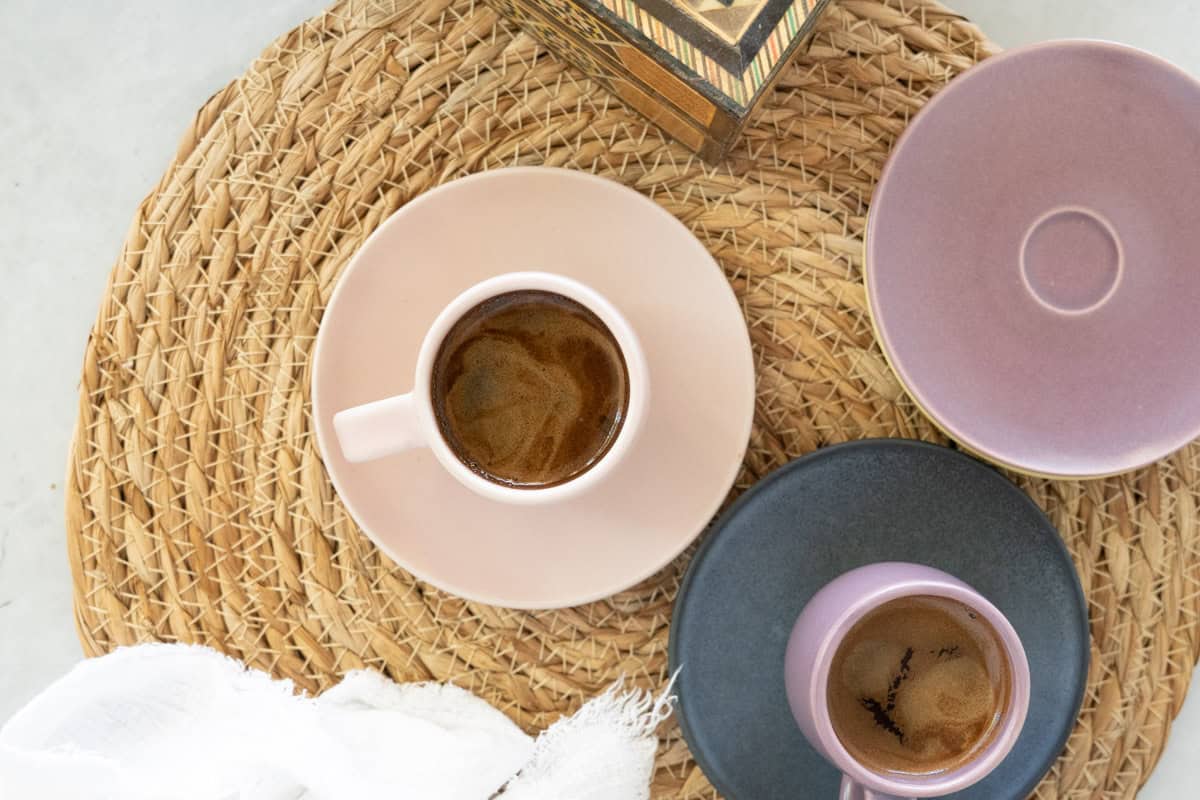
Lebanese coffee is often paired with sweets along with a glass of water.
Try serving it with:
- Sweet kaak (crispy ring cookies)
- Namoora (semolina syrup cake)
- Sfouf (turmeric cake)
- Baklaweh (Middle Eastern baklava)
- Or for something different, try this crustless cheesecake
Ingredients
The complete list of ingredients with measurements, can be found in the full recipe card below.
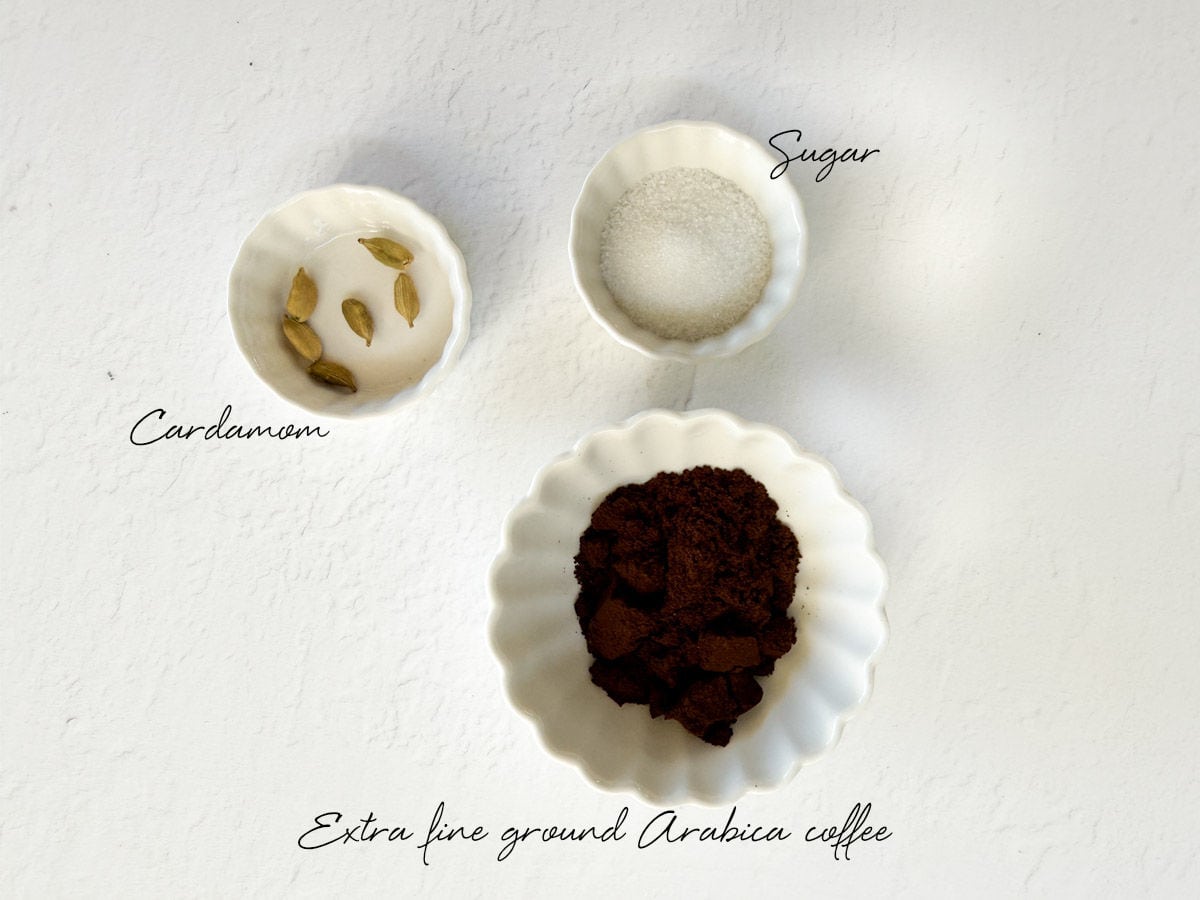
Lebanese coffee is made with a few simple ingredients, each playing an important role.
- Lebanese coffee blend - a combination of medium and dark roast extra finely ground Brazilian Arabica coffee. Sometimes the blend is pre-mixed with cardamom, if not you can ask for this.
- Water - essential for brewing
- Sugar (optional) - added during heating
- Cardamom (optional) - but a non-negotiable in my family. Added for flavor which IMO takes the coffee to another level. I will use either cardamon pods or ground cardamon which I explain how to use either in the recipe card below.
Some well-known Lebanese coffee brands include Café Najjar and Maatouk. Note making your own blend gives you more control over flavor.
Equipment
Below are the two items needed to authentic Lebanese coffee. I've also set up a storefront as a one-stop-shop for purchasing Lebanese type kitchen items and goods.
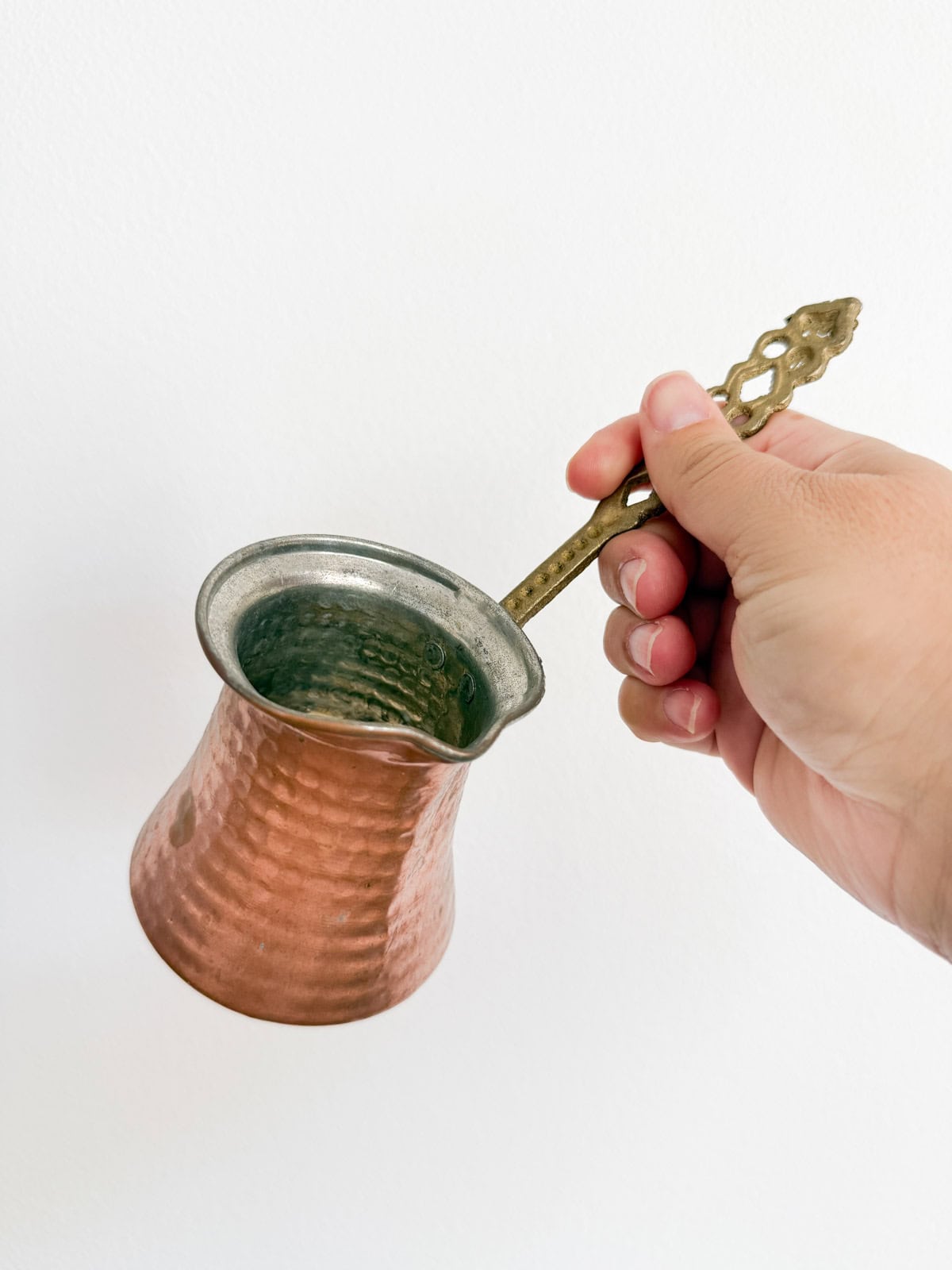
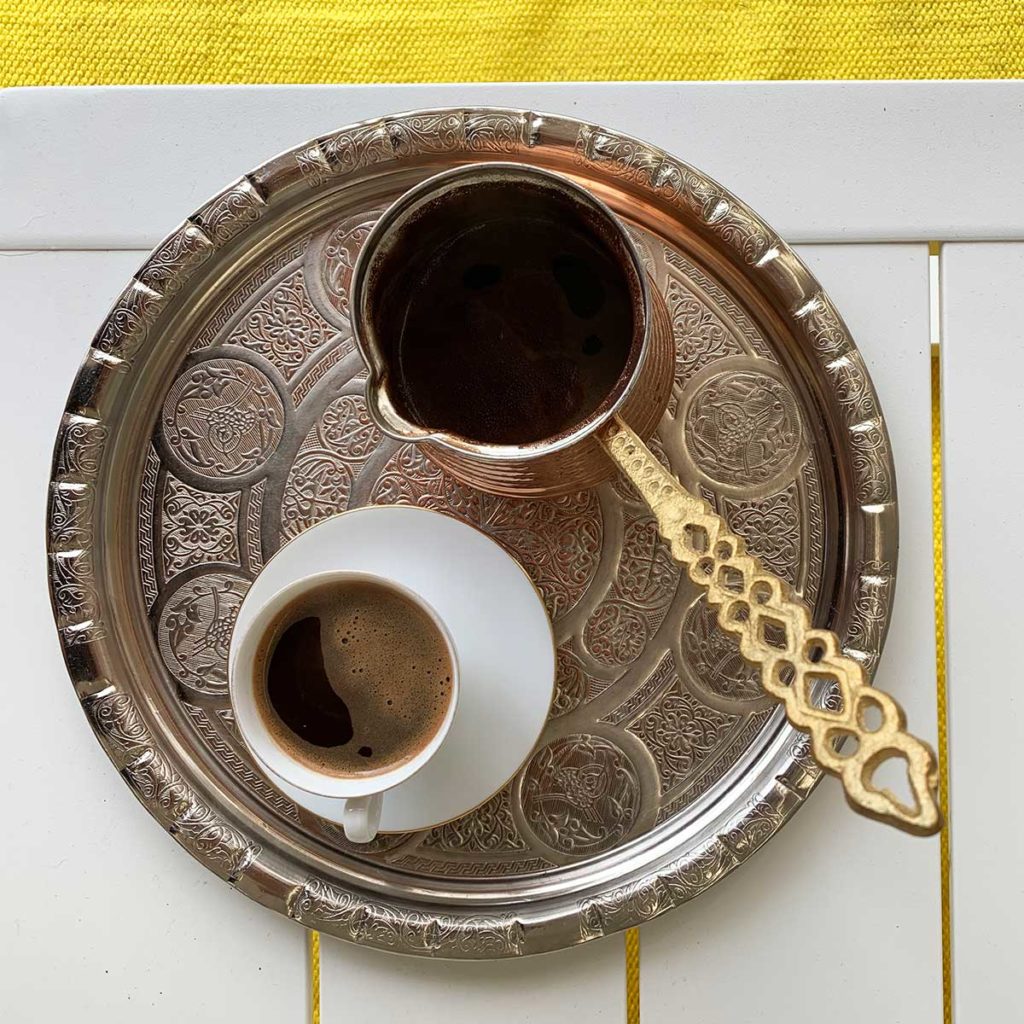
A rakweh is a small long-handled metal or glass pot with a spout used to brew the coffee. These are available from single through to family sized pots and go by other names in other regions.
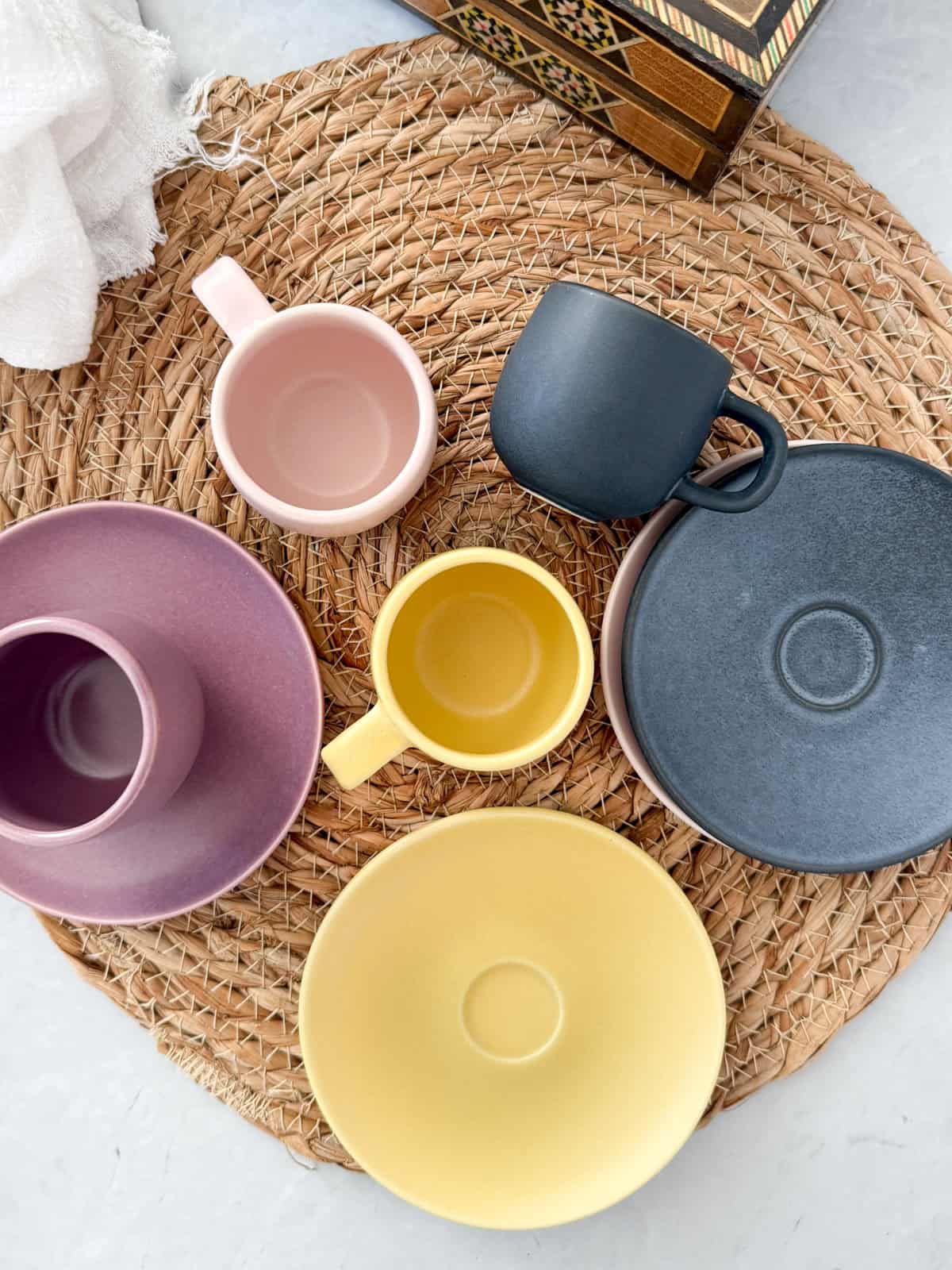
To serve use either demitasse cups (60-90 ml / 2-3 fl oz) or fnejin ahweh (the plural of finjan) which are the small (sometimes handleless) cups traditionally used for Arabic coffee. The cups I use (in the photos) hold about 70 ml (2.5 fl oz).
How to Make Lebanese Coffee Blend
Make Your Own Coffee Blend (Optional)
- Combine 2 parts dark roast coffee beans with 1 part medium roast or as you please
- Optional but highly recommended - add cardamom pods (about 10% of the total weight)
- Grind until very fine
- Store in an airtight jar in the fridge or pantry (up to 2 weeks) or freezer (up to 6-12 months)
Refer to the recipe card below for both ingredient measurements and instructions for how to use your blend.
Texture and Flavor
Lebanese coffee is bold, slightly thick and intensely aromatic. The flavor can range from bitter to lightly sweet with cardamom adding a warm fragrant note.
Because it is unfiltered a fine layer of coffee grounds settles at the bottom of the cup.
Janelle's Tips
- If making a larger batch of Lebanese coffee - pre-boil water in a kettle and use it in the rakweh to speed up the process
- Sugar is always added during boiling the water and not after
- Do not stir the coffee once poured into cups to not disturb the wejh/wesh (top layer known as "face" in Arabic)
- The coffee grounds at the bottom are not meant to be consumed - see cultural notes below
- Serve with a glass of water to cleanse the palate and aid hydration
- Store coffee grounds in the freezer for longer freshness. The sooner they're used the fresher the taste and the better the wajh (crema) on top
Using hot water helps control the brewing temperature and allows the extra finely ground coffee to bloom releasing trapped gases and improving flavor.
If your Lebanese coffee is missing its foam (wejh/wesh) there are a few common reasons.
First, the coffee may be too old. Fresher coffee contains the gases needed to create that foam when heated.
It could also be that you're not using enough coffee. I've found that a ratio of 1 demitasse cup (finjan ahweh) of water to 2 heaped teaspoons of coffee works best. Emphasis on heaped. Anything less tends to result in a flat foamless coffee.
Another reason could be the grind. Lebanese coffee requires an extra fine grind and anything coarser won't produce the same result.
Heat control also plays a role. Once the water begins to boil reduce the heat. A rapid rise causes the foam to diminish before it has a chance to form properly.
Lastly, pouring technique matters. Pour the coffee from the rakweh as close to the cup as possible - as pouring from too high can disrupt the foam.
Cultural Note
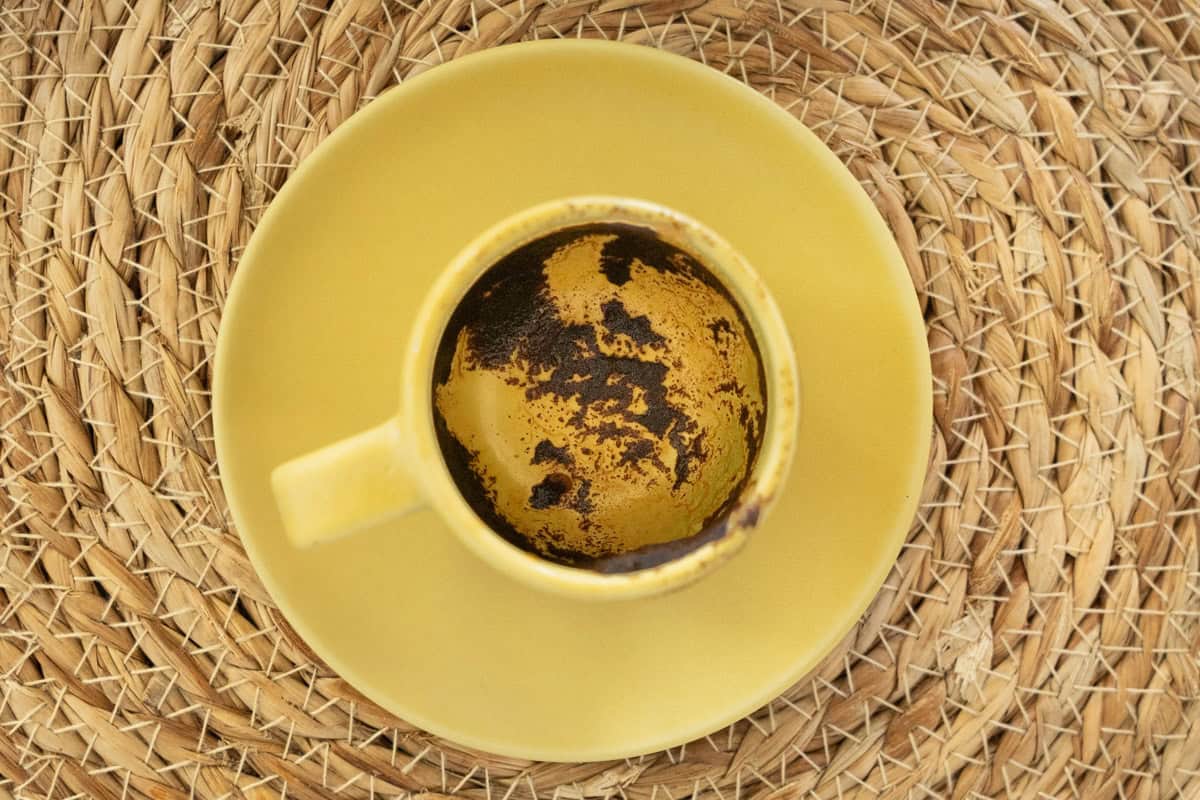
The coffee grounds left at the bottom of the cup are sometimes used for fortune-telling which is a practice known as tasseography. The cup is turned upside down immediately after finishing the cup of coffee and left for up to a minute for the patterns to form. These patterns are then interpreted. What do you see in the below cup? I see a boot but also a man's face! Hmmm, interesting - I wonder what that means!
Did you make this? I'd love to know! Leave me a comment below with a ★★★★★ star rating or tag @plantbasedfolk on social media.
Recipe
Lebanese Coffee
Ingredients
- 2 demitasse cups Water
- 4 teaspoons Brazilian Arabica coffee very finely ground, heaping (Arabic coffee)
- ⅛ teaspoon Ground cardamom heaping, or use 6 pierced pods
- 2 teaspoons Sugar optional
Instructions
- Using a finjan or demitasse cup measure 2 cups of water and add it to a rakweh (coffee pot). Add the sugar (optional). If using cardamom pods - add them now.Place over medium-high heat and stir to dissolve the sugar.
- Once the water begins to bubble remove from the heat and add the coffee. Return to low-medium heat.Stir gently until it begins to bubble again. Then remove from the heat and allow it to settle. Repeat this process two more times (for a total of three rises).Turn off the heat and discard the cardamom pods if used (see notes below).
- Pour into two small cups filling just below the rim. Serve with a small glass of water.
Video
Notes
Nutrition
N.B., nutrition info is an estimate based on an online nutrition calculator. This will vary based on the specific ingredients you use.
 If you enjoyed this recipe, consider supporting my work for the cost of a cup of coffee.
I've updated this guide from just tools (2019) to a full brewing tutorial (2026).

Comments
No Comments